Latest Vr, multi-platform Game News & Updates




☁ Vr, multi-platform News
31 articles 🎮 VR, Multi-platform
Ace Attorney: Dual Destinies VR Was Just Announced For 2027 – I Have Some Objections
!Game Informer News(https://gameinformer.com/sites/default/files/styles/bodydefault/public/2026/09/24/2c73c622/aa5vrheader.jpg.webp) Ace Attorney fans have been hoping for the announcement of a new entry for many years now, but today, we got a surprise instead. Ace Attorney: Dual Destinies VR is a virtual reality version of the fifth mainline game in Capcom's lawyer-themed adventure series, and it's coming to Meta platforms next year. You can watch the reveal trailer below. This port gives Dual Destinies a more hands-on approach, allowing players to pick up evidence to inspect, examine environments for clues in first person, and use gestures and voice commands during cross-examinations: You can literally yell "Objection!" to object to a witness' contradiction. You don't physically inhabit the protagonist 100% of the time, however – dialogue during trials still involves seeing characters in third person, meaning you'll still get to see Apollo, Phoenix, and Athena's over-the-top animations. According to the game's store page, it will come to Meta Quest 3S, Meta Quest 3, Meta Quest Pro, Meta Quest 2, and Meta Quest, though developer Amata K.K.'s description of the game omits the original Meta Quest from that lineup. It drops sometime in 2027. Personally, I find this to be an odd move for the series. Capcom has been generous and thorough with its HD collections of the older Ace Attorney titles. After the Ace Attorney Investigations Collection dropped in 2024, the only remaining Phoenix Wright adventure you couldn't play on modern platforms was his crossover with Professor Layton. As such, it seemed like the only next step was a brand new entry, so a VR adaptation is particularly surprising. Ace Attorney also isn't a series that needs to be a VR title. As fun as it might be to yell "Objection" every couple of minutes during a cross-examination, the vast majority of gameplay is non-voiced dialogue. Unlike the highest quality VR games, which work best in short bursts, Ace Attorney games are long, and wearing a headset just to mostly read text for a few hours doesn't sound appealing. Finally, Phoenix Wright: Ace Attorney – Dual Destinies is my least favorite Ace Attorney game, but I understand why it was their pick here. It's the series' fifth entry, but it was the first foray into 3D, so it's the earliest release that could be reasonably set in VR. You can play it without playing prior titles, but I'd always recommend the original trilogy's HD collection over this one. The best game to get the VR adaptation would have been The Great Ace Attorney Chronicles, as it's a better standalone adventure and it's been longer since that game's release (2021) compared to the HD re-release of Dual Destinies, which dropped in 2024's Apollo Justice: Ace Attorney Trilogy(https://gameinformer.com/review/apollo-justice-ace-attorney-trilogy/doing-ace-attorney-justice). But even though The Great Ace Attorney Chronicles is a better game(https://gameinformer.com/review/the-great-ace-attorney-chronicles/the-great-ace-attorney-chronicles-review-you-know-these), Dual Destinies is shorter and has more of the series' iconic characters, so it's a more reasonable first project. The silver lining is that Capcom is neither developing nor publishing this game (that's all being done by Amata K.K.), so there's a decent chance Ace Attorney 7 is still in the works – the development team won't be preoccupied with finishing this VR title first. Maybe this VR version will drastically change my opinion of Dual Destinies, but it's unlikely. I'll find out when the game drops sometime next year. !(https://gameinformer.com/sites/default/files/styles/entitybrowserthumbnail/public/2026/09/24/02c6ba57/aa5vr1.jpg.webp)!(https://gameinformer.com/sites/default/files/styles/entitybrowserthumbnail/public/2026/09/24/4738aa61/aa5vr4.jpg.webp)!(https://gameinformer.com/sites/default/files/styles/entitybrowserthumbnail/public/2026/09/24/936e907e/aa5vr5.jpg.webp)!(https://gameinformer.com/sites/default/files/styles/entitybrowserthumbnail/public/2026/09/24/e8d255d0/aa5vr3.jpg.webp)
 🟩 Xbox, VR, Multi-platform
Meta’s $1,300 VR Glasses Could Be The Most Expensive Way To Play Xbox Games
For years, Meta has had one of the best entry-level virtual reality headsets with the Quest 3 and its slightly lower-specced successor, the Quest 3S. The VR hardware packs a punch, but if you're looking for an even lighter option, the company's new VR glasses could catch your attention. Essentially a Quest 3 that's designed to be easier to carry around, the Meta VR Glasses also come equipped with some impressive screens--and a massive price tag of $1,300 when they launch in Spring 2027. According to Meta, the VR Glasses weigh just 100 grams, thanks to a pocket-sized puck that is tethered to the specs. This unit houses all the tech for running apps and games on the VR Glasses, and inside you'll find a Qualcomm Snapdragon Reality Elite chipset, 128GB of storage, 12GB of RAM, and a battery. The glasses feature 5K Micro OLED lenses, which can output 2412 x 2288 pixels per eye at a 120Hz refresh rate. https://youtu.be/xyDbmMy5nQ Out of the box, these can access all apps and games from the Meta Quest catalog, and they support Xbox Cloud Gaming. Meta also says that they're "IMAX-Enhanced certified" as they support the Dolby Vision HDR format, and they can be used to watch 3D movies. When they arrive, users will have a library of 75 games that they can play using only their hands, or they can connect it to a gaming console or handheld as an alternate display option. These do not come with controllers by default, but you can buy Touch Plus controllers separately or pair an existing Quest 3/3S set with the glasses. The other big feature touted by Meta are Holograms, avatars that use a photorealistic recreation of your visage. Similar to the Personas used in Apple Vision Pro headsets, you can use these to interact with people when you call other Meta VR Glasses owners. The catch here is that Holograms will be rendered as a flat stereoscopic video stream, but Meta says it plans to evolve these over time and eventually use them to replace the current cartoon-inspired avatar system. The price tag will likely be the biggest obstacle for Meta, as at $1,300 it is more than double the cost of a 512GB Quest 3 headset and several times more expensive than a Quest 3S. The portability factor is a plus, but if you're looking for high-tech glasses that you can use specifically for watching movies or as a second screen for your consoles, then something like the Viture Beast(https://www.gamespot.com/articles/the-viture-beast-xr-glasses-made-me-question-whether-i-need-a-tv-for-gaming/) and Pro 2 XR glasses(https://www.gamespot.com/articles/vitures-new-pro-2-xr-glasses-want-to-be-the-ones-you-can-wear-for-hours/) are worth looking at. They may not be lightweight virtual reality devices, but they offer plenty of bang for your buck at a much lower price than the Meta VR Glasses. But for pure VR gaming purposes, Meta's new VR Glasses could be a solid option, considering how the platform is already home to dozens of great games and upcoming ports, like High on Life(https://www.gamespot.com/articles/high-on-life-is-helping-make-the-case-for-bigger-games-on-quest/). If you need a pricy option right now, there's also the Steam Frame, a VR headset from Valve that costs over $1,000 and has begun shipping out.
 🎮 VR, Multi-platform
High On Life Is Helping Make The Case For Bigger Games On Quest
High on Life has been a big hit(https://www.gamespot.com/reviews/high-on-life-review-talking-heads/1900-6418014/) since it first launched in 2022, thanks to its bizarre sense of humor, motor-mouthed guns, and polished gameplay. But can it succeed as a virtual reality port? That's the question Flat2VR is aiming to answer, as the team behind several VR games is now working with Squanch Games to bring High on Life to Meta Quest 3(https://www.gamespot.com/articles/high-on-life-is-coming-to-vr-and-yes-you-can-stroke-your-weird-guns/) and 3S headsets. While it's still early days for the project, I took the time to chat to High on Life VR game director Emily O'Neal and Eric Masher, co-founder and chief operating officer for Impact Reality and Flat2VR Studios, about this project and the challenges involved in adapting it for a new platform. And yes, Knifey(https://high-on-life.fandom.com/wiki/Knifey) did make his way into the conversation. https://youtu.be/U9Kcs-XALBA So why VR? High on Life has been available on PC and console for several years now, but it is considered a smaller, niche platform--or so you'd think, as Masher explained that the VR user base has grown considerably over the years. "VR is a smaller market; it doesn't mean that it's a small market," Masher said. "You know, we're looking at numbers now of Quest headsets being in the 30-million to 40-million range. Those are not numbers to take lightly. A game like Gorilla Tag--which is a free-to-play game--has done over $100 million in revenue. We do see that audience that has been playing Gorilla Tag starting to grow up. They started when they were younger kids, and now they're getting older and have disposable income. What are they going to want to play next?" "We want to bring them those high-quality games like High on Life, that have more teeth, more depth, and more playability as an actual game. We're not here just for a short snapshot in time; we're here to help grow this industry to where it will be in three to five years from now. Our job and our mission at Flat2VR is to bring the immersive, amazing games that you love playing right now on your console and PC, but bring it to another platform that makes a whole bunch of sense and that feels completely different but still the same.” !(https://www.gamespot.com/wp-content/uploads/2026/09/High-on-Life-2.jpg?w=636) Bringing High on Life to VR isn't an easy task either, as you can't just press a "Convert to VR" button for a project of this scale. As O'Neal explained, the original game is massive, and the team is looking to make it run as smoothly as possible on a VR headset. "There are a ton of animations and wildly different worlds, so even getting that much data to fit on a standalone platform is a big challenge," O'Neal explained. "You have to load it all in a decent amount of time and run it in real time, ideally at 72 frames per second. All of that optimization represents a cluster of problems our tech-art teams are chipping away at from many angles. A huge part of our technical challenge has been upgrading the game to a more modern version of Unreal Engine. Modernizing our toolsets allows us to perform the optimizations needed to get these massive, gorgeous, colorful worlds running on Meta Quest. That covers the core issue: the sheer scale of the game and optimizing it to fit on the headset while maintaining frame rate." O'Neal added that the team wants players to poke and prod the Gatlian firearms they collect in the game, and they represent an incredible design challenge thanks to their expressive facial details and complex skeletons used to make them emote. "The Gatlians are without a doubt my favorite part of the game. When defining the mission statement for the VR adaptation, they are 100% the centerpiece. The core question we continually return to with every feature is: Do you feel like you're holding a living creature in your hand, and when they speak to you, do you feel like you're truly interacting with them?Because the Gatlians are the main characters, they are our highest priority." !(https://www.gamespot.com/wp-content/uploads/2026/09/High-on-Life-3.jpg?w=636) "A huge part of that focus goes into the gunplay since they serve as your weapons. With any VR first-person shooter, how you handle reloading is vital--whether that's a realistic manual reload, a simple button press, bringing the weapon to your hip, or providing options for all of the above. While our design team has built reload mechanics many times before, designing them for the Gatlians has been uniquely fun because of their distinct body shapes and personalities. We look at the unique physical traits of each alien, considering not just function, but how players can fidget and interact with them while listening to in-game dialogue. Ultimately, the Gatlians are the defining feature of the VR port because they are in your hands the entire time." Out of all the Gatlians, Knifey is arguably the breakout star of the High on Life arsenal. A sentient blade with an unmatched bloodthirst, O'Neal teased that the murder-happy melee tool is a big focus of the team. "Yes, Knifey is 100% getting the most treatment out of the whole cast," O'Neal said. "There's a huge gap between pressing a button to trigger a knife slash versus making that motion yourself, so some of the biggest new systems we're building are specifically for Knifey. !(https://www.gamespot.com/wp-content/uploads/2026/09/High-on-Life-1.jpg?w=636) "His whole personality revolves around pure bloodlust—he's constantly begging you to use him and stab things—so we're leaning hard into that. We're building new VR-specific systems to capture that visceral feeling of stabbing Knifey into flesh. It's not a gory game and won't feel like one; we're maintaining the same comedy and humor with all of Knifey's interactions, but leaning into mechanics you can only achieve with a knife in VR. Most importantly, we want a Knifey-first strategy to be a genuinely viable way to play the entire game, so we're spending a lot of time with him." One of the other challenges with virtual reality, especially games with a variety of fast-paced movement systems like High on Life, is the looming spectre of motion sickness. Some people don't suffer from it; others are ready to hurl chunks after a few minutes of Pistol Whip. But as Masher explained, the High on Life VR team is going all out on providing options that help players fine-tune the game to their tastes. "We take comfort super seriously. The real power fantasy lies in the traversal abilities you get with the bounty suit, so we don't want to sacrifice or remove any of that from the game, but we do want it to be approachable to anyone who wants to play," Masher explained. "The first piece of that is performance: It has to be stable, responsive, and hit its target frame rate. That's the foundational element to ensure people don't get motion sick. Beyond that, we're going all out on options. As a team of people who love and play VR in our free time, we offer the full suite of accessibility settings you'd expect in a VR title--from snap turn and smooth turn to custom smooth turning speeds--so players can tune the experience to whatever feels comfortable for their body. The goal is to let players dial in their preferences to minimize the discomfort that can come from smooth movement and turning." !(https://www.gamespot.com/wp-content/uploads/2026/09/High-on-Life-5.jpg?w=636) Masher also added that motion sickness was something we could hear much less about in the future, as, thanks to a generation of young users growing up with VR headsets, the immersive nature of games on that hardware was something they'd become accustomed to. "What's nice about motion sickness is that we're starting to see it become less prominent, especially with younger players. Years ago, VR was a niche hobby where you were probably 20 or 30 years old before putting on your first headset. That's no longer the case--kids are growing up in VR headsets now, with games like Gorilla Tag introducing kids as young as 10 or 11 to the platform. "They know nothing but gaming inside a VR headset, so by the time they grow up, it's completely normal for them. It's almost like we're breeding motion sickness out of the audience. You're either susceptible or you're not, but if VR is all you've ever known, motion sickness just isn't an issue. So I'm hopeful it becomes a thing of the past. Plus, as Emily noted, hardware getting better and making higher frame rates easier to hit makes a massive difference." High on Life VR doesn’t have a release date yet, but you can preorder it now through the Meta Horizon Store(https://www.meta.com/experiences/high-on-life-vr/24486859074338229/).
 🖥 PC, VR, Multi-platform
Valve’s virtual reality plans hit actual reality
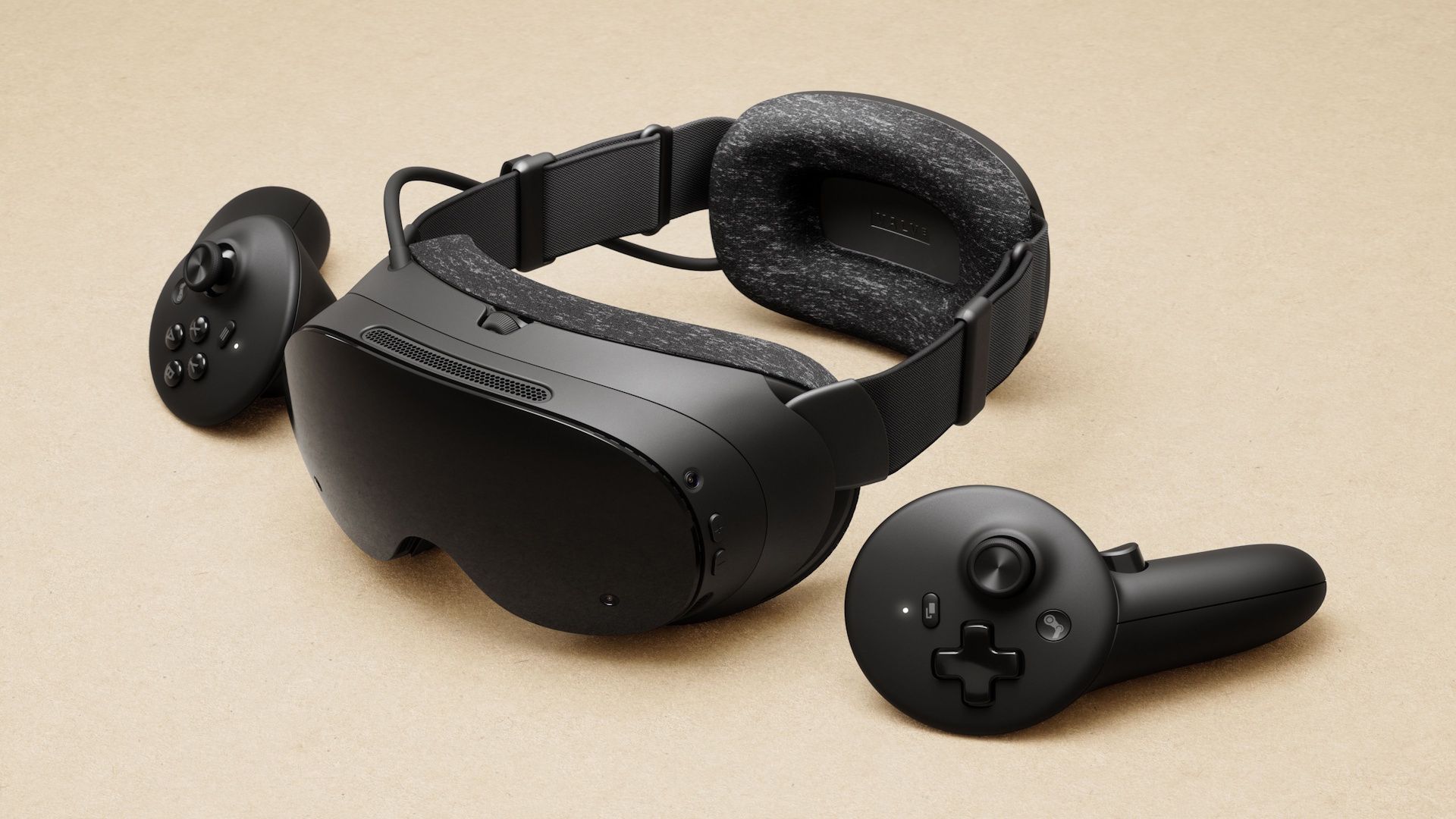
The Steam Frame headset is here, and it may not surprise you: it was supposed to cost less than $1,059. "We set out to come out with a device that would have been far more affordable, but the global RAM market, the global storage market have impacted us the same way they've impacted everybody," Valve &8230;
 🖥 PC, VR, Multi-platform
Valve's VR Headset Costs $1,000+, and Reservations Are Open Now
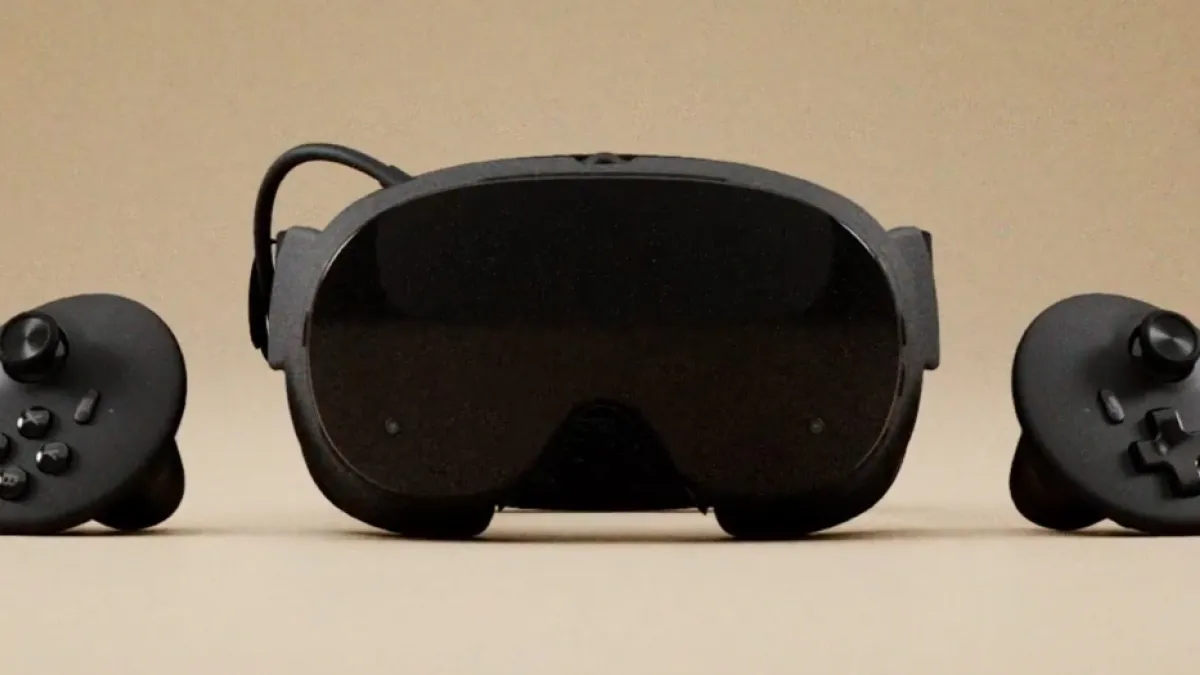
Valve has revealed the price of its VR headset, the Steam Frame, and it'll cost you a pretty penny. You can sign up for the waitlist now.
 🖥 PC, VR, Multi-platform
Here's How To Get A Steam Frame, Valve's VR Headset, And How Much It Costs
!Game Informer News(https://gameinformer.com/sites/default/files/styles/bodydefault/public/2026/09/14/26528023/steamframeofficialoverviewandquickstartguide1-45screenshot.jpg.webp) Valve's new VR headset, the Steam Frame, is dropping very soon, and today is the first day you can sign up to purchase one of your own. Much like with the launch of the Steam Machine, the console-like PC that dropped earlier this year, today is the first day you can get added to a randomized list to be selected to purchase a headset of your own. Sign-ups are available now and will be live for 72 hours, ending at 1:00 PM ET on September 17. "We found the reservation system to be helpful with the launch of Steam Machine by improving the purchase experience and limiting resellers, and are implementing it once again for Steam Frame," Valve stated in a press release. It's nice that the practice seemingly limits scalpers (the bane of any tech-buyer in the 2020s), but it is a shame that the process is partially left up to luck. Valve says the first wave of customers will be notified starting on September 18. !Game Informer News(https://gameinformer.com/sites/default/files/styles/nocompression/public/2026/09/14/33d29037/steamframeofficialoverviewandquickstartguide0-15screenshot.jpg.webp)(https://gameinformer.com/sites/default/files/styles/nocompression/public/2026/09/14/33d29037/steamframeofficialoverviewandquickstartguide0-15screenshot.jpg.webp) The Steam Frame is a wireless VR headset that allows you to play VR and non-VR games on Steam. It comes with two Steam Frame controllers, one for each hand, and can be connected to a Steam Machine or other PC to stream games. It also comes with the critically acclaimed Half-Life: Alyx, but it doesn't come with a power supply. You can purchase one for $30 on Steam, but any Steam Deck charger or other USB-C charger that supports 45W or higher can work. The Steam Frame comes in a 256 GB version and a 1 TB version. Here's how much each costs, according to the press release: - Steam Frame 256GB: 1,059 USD/ 1,529 CAD/ 1,049 EUR/ 889 GBP/ 1,609 AUD/ 4,539 PLN - Steam Frame 1TB: 1,299 USD/ 1,859 CAD/ 1,279 EUR/ 1,089 GBP/ 1,969 AUD/ 5,549 PLN !Game Informer News(https://gameinformer.com/sites/default/files/styles/nocompression/public/2026/09/14/2aae9cbf/sfheadsetcontrollersfront01.jpg.webp)(https://gameinformer.com/sites/default/files/styles/nocompression/public/2026/09/14/2aae9cbf/sfheadsetcontrollersfront01.jpg.webp) And if you're wondering about the Steam Frame's other features or what games it might be able to run, here's the store page's rundown of the headset's hardware specs: - 4 nm Snapdragon® 8 Gen 3 - ARM64 - 16GB Unified LPDDR5X RAM - 256GB UFS storage, microSD card slot - Rechargeable 21.6 Wh Li-ion battery - 2160 x 2160 LCD (per eye) - 72-144Hz refresh rate (144Hz experimental) - Inside-out camera based tracking - Wi-Fi 7, 2x2 - wireless adapter included - Bluetooth 5.4 - Dual speaker drivers per ear, dual microphone array - SteamOS 3 You can sign up to order the Steam Frame and read about the rest of its specs here(https://store.steampowered.com/hardware/steamframe). For more details and some footage of the headset in action, you can check out the video below: Alongside the Steam Frame, you can also purchase the ergonomic accessories kit for an extra $59 USD. It includes a strap for each controller, a top strap for the headset, and an extended light blocker. Valve describes the kit as "designed for comfort during extended play sessions." You can check out a breakdown of the accessories in the video below: You can sign up to get a Steam Frame today, but don't forget that sign-ups end at 1:00 PM ET on September 17. If you want to learn more about the Steam Frame's launch game, check out our review of Half-Life: Alyx(https://gameinformer.com/review/half-life-alyx/half-life-alyx-review-an-amazing-return-to-city-17).
 🖥 PC, VR, Multi-platform
Valve has ported Half-Life: Alyx to ARM, and it’s free with Steam Frame
Today, Valve is launching its first headset since 2019 - the new Steam Frame - while dodging our questions about whether it'll ever make another VR game to go with it. But buyers of the $1,059 gadget will get one flagship VR game anyhow, and it's great. Every Steam Frame comes with a copy of &8230;
 🖥 PC, VR, Multi-platform
The Steam Frame is made for irresponsible hardware nerds like me
For nearly three weeks, I've been testing the limits of Valve's Steam Frame, the company's new wearable PC. At first glance, it's easy to write it off as a pricey headset that missed the VR craze. At $1,059 with 256GB of storage or $1,299 for 1TB, it costs two to three times as much as &8230;
 🖥 PC, VR, Multi-platform
Valve’s Steam Frame costs $1,059
Valve is finally releasing its Steam Frame headset, which can run both flat and VR games locally and stream both kinds of games from your PC. The Steam Frame will start at $1,059. Valve will also offer a 1TB model that starts at $1,299. Every Steam Frame will come with a copy of Half-Life: Alyx, &8230;
 🖥 PC, VR, Multi-platform
I reviewed Valve’s Steam Frame, ask me anything
Hey! I'm Sean Hollister, you might have seen me around this place a few times, and I just spent three weeks beta-testing the Steam Frame, Valve's hotly anticipated new don't-call-it-a-VR-headset that might also be an early glimpse at the future of games that run everywhere. At 4PM ET today (that's 1PM PT for West Coasters &8230;
 🎮 VR, Multi-platform
'It Ends' Director Alex Ullom Reveals the Movie's Meaning and His Surprising Sequel Plan
The director of It Ends talks liminal spaces, Gen Z horror, the 3-hour cut he had to scrap, and his plans for a sequel
 🖥 PC, VR, Multi-platform
Watch Valve set up the Steam Frame in its own leaked videos
Valve just leaked several new videos showing the Steam Frame's unboxing, setup process, and various accessories. The videos apparently appeared on the ARM Steam client following an update, but they were "quickly pulled after that," according to the Steam Hardware Updates account on X. The Steam Frame is Valve's virtual-reality headset that can stream games &8230;