The Steam Frame is made for irresponsible hardware nerds like me
Overview & Key Takeaways
For nearly three weeks, I've been testing the limits of Valve's Steam Frame, the company's new wearable PC. At first glance, it's easy to write it off as a pricey headset that missed the VR craze. At $1,059 with 256GB of storage or $1,299 for 1TB, it costs two to three times as much as […]
For nearly three weeks, I’ve been testing the limits of Valve’s Steam Frame, the company’s new wearable PC. At first glance, it’s easy to write it off as a pricey headset that missed the VR craze. At $1,059 with 256GB of storage or $1,299 for 1TB, it costs two to three times as much as similar-looking headsets from Meta.
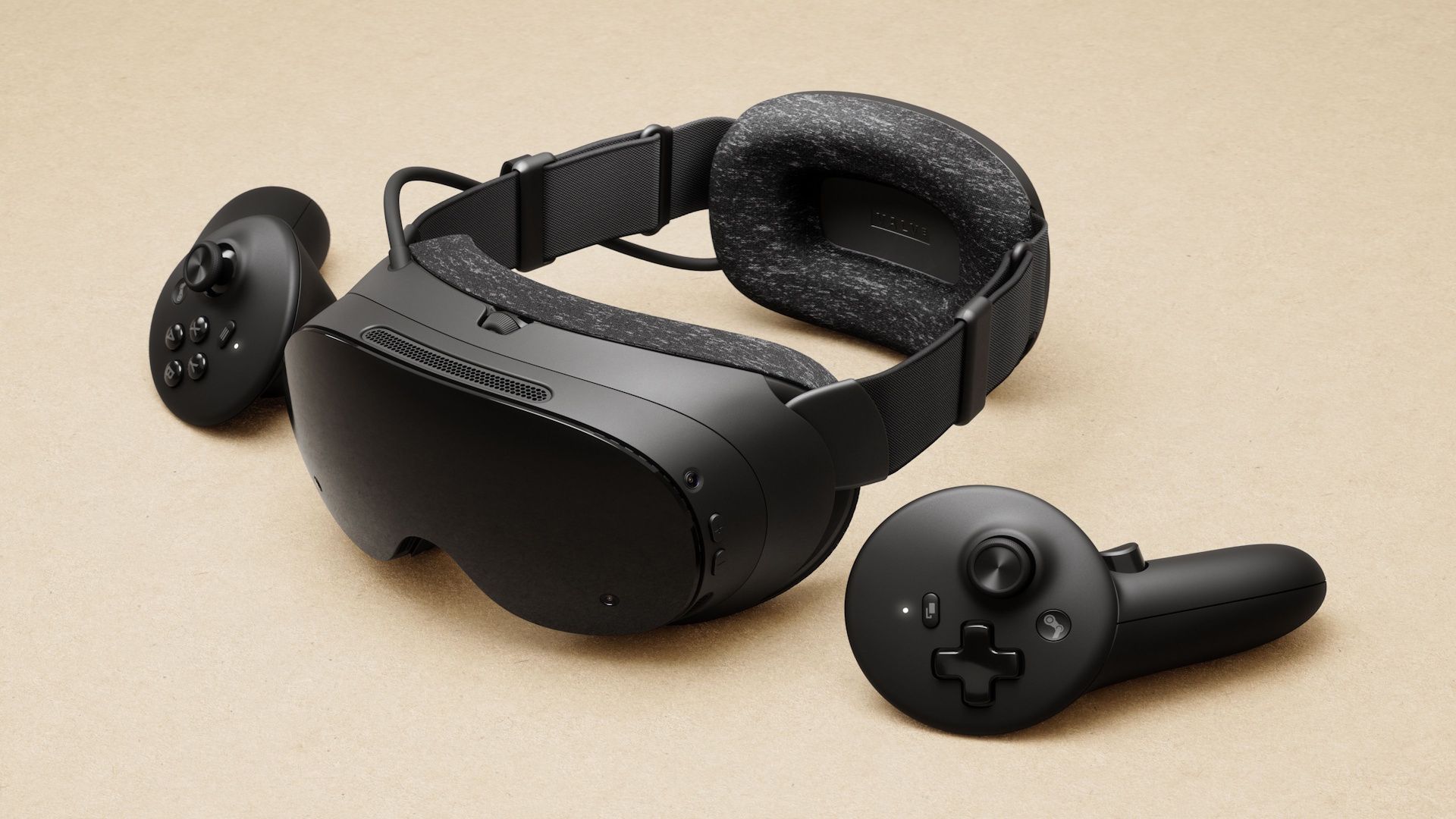
You should not write it off that way. The Steam Frame isn’t just a VR headset. It’s not even primarily a VR headset. And it’s the most comfortable headset I’ve ever worn. It weighs just over 1 pound (469g) with its optional top head strap attached, and doesn’t leave a mark on my face even after hours of use.
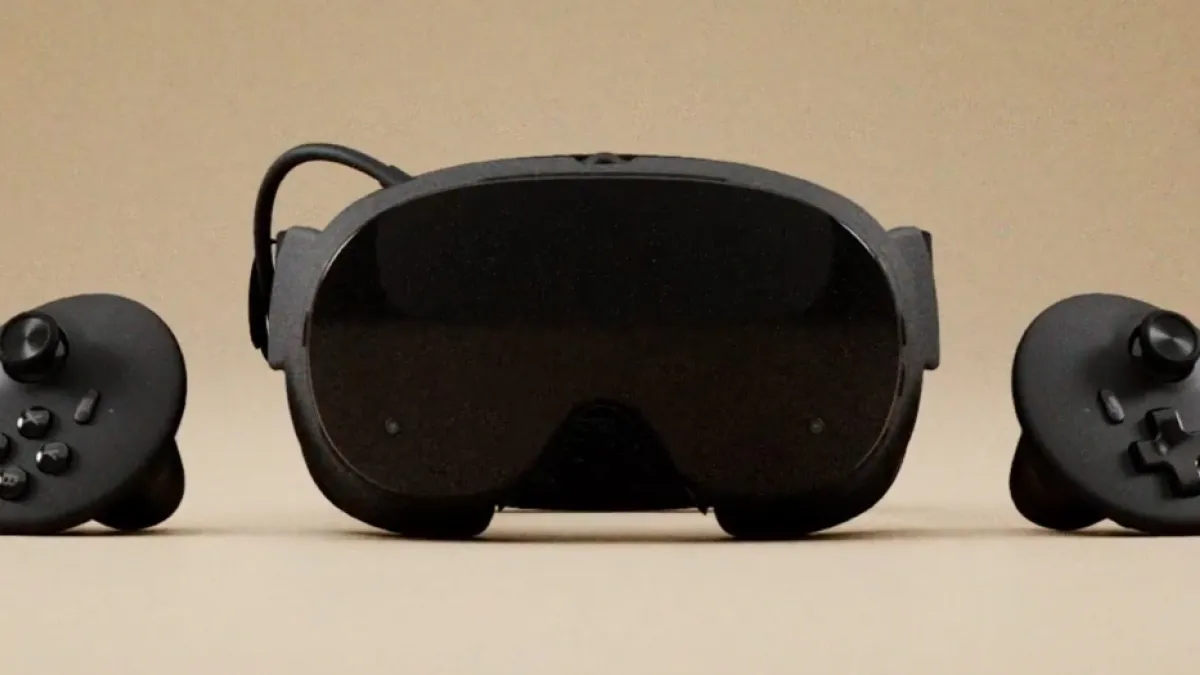
The Steam Frame is far more ambitious than VR alone. It’s an experimental attempt at a complete spatial computer that you can wear, not unlike the Apple Vision Pro, only here it’s aimed at gamers who want to play their flat library of Steam games plus the handful of VR titles on tap.
Pictured with optional $59 kit with hand straps and top third head strap; I highly recommend them.
No, if you write off the Steam Frame, it should be because you don’t want to pay $1,000-plus for early access hardware. Every day I spend with the Steam Frame, I feel like a beta tester. I’ve seen games crash so hard I needed to reboot the headset. I’ve had virtual objects, controls, and audio disappear. I’ve seen the entire device lose power more than once, its screen winking out right in front of my eyes.
But you should know I’m having so much fun. The Frame’s so comfortable that I don’t mind wearing it, and it feels like one of the most exciting betas I’ve ever tried. Like the Steam Deck at its debut, this is gadget nerd wish fulfillment. It’s a chance to watch Valve, one of the most intriguing companies in gaming, build a plane while flying it.
$1059
The Good
- Lightweight and comfortable to wear
- Precise wands double as a full gamepad
- Plays so many games so many ways
- Included 6GHz dongle allows short-range PC streaming even if you have questionable Wi-Fi
The Bad
- Doesn’t feel like a finished product
- Crashes, bugs, other assorted instability and inconsistencies
- Not enough performance for many standalone games
- Short battery life of one to two hours
- Some audible fan noise
The Steam Frame is primarily a gaming device. And it can certainly play games in a lot of different ways:
- It can stream any flat or VR game from your Steam-equipped desktop or laptop.
- It can play less demanding Windows games via emulation on its Arm-based Qualcomm Snapdragon 8 Gen 3 chip.
- It can effectively be a Meta Quest, playing immersive VR games originally designed for Meta’s Android-based headsets.
- It can play games natively designed for the Steam Frame’s Linux-on-Arm, too — like a new standalone version of the best single-player VR game, 2020’s Half-Life: Alyx.
- And it can play mixed reality games where virtual objects seemingly float in your real world, as seen through the headset’s passthrough cameras.
It can do much of this because of the power of software — because Valve has spent years making games run where they didn’t originally belong.
But that’s just what it can do with games.
I am typing these words to you from virtual reality. I’m inside the Steam Frame surrounded by six virtual screens.
In front of me is Google Docs on effectively the largest computer monitor I’ve ever used, even counting the 48-inch TV that once lived atop my desk, and that screen is not alone. If I spin my office chair to the left, I’m facing my notes, calendar, and web browser. Spin it to the right, and there’s The Verge’s newsroom, my email, and a panel of Steam games. Above me, a Linux copy of Space Cadet Pinball waits to be played, while a YouTube window pipes in lo-fi music to help me focus.
Three of these screens are copies of my desktop PC’s three monitors, streaming from that PC, while the other three are running on the headset itself. I have Windows and Linux desktops running side by side in my own private world.
But whenever I try to explore all the possibilities I’ve just laid out, I quickly run into unexpected limitations, crashes, and bugs.
A peek at my multi-monitor Windows desktop inside the Steam Frame.
Let’s say I’m on my living room couch, and I want to stream a game from my PC that won’t easily run on the headset’s own chip, like the just-released Star Wars: Zero Company. The headset gives me a choice: I can launch the game in a window, or I can stream my entire PC desktop to the device.
I launch it in a window, then use the virtual laser pointers in Valve’s wand controllers to stretch the screen across my entire living room wall, while my wife sits next to me watching the BTS concert on my much smaller real-life TV on the same wall. I click the grip button on Valve’s wands one more time, and they begin emulating a full Xbox gamepad, with every button I need to play.
Valve’s virtual laser pointers are the primary way to navigate the UI; the headset can’t track your hands without the wands yet.
But suddenly, my streaming game is lagging and dropping frames like nobody’s business — because the Frame couldn’t decide whether to prioritize my home Wi-Fi or Valve’s included 6GHz wireless dongle, the company tells me later. My favorite seat on the living room couch is only about 12 feet and one wall away from the dongle, but that’s apparently the edge of its useful range. While Valve has “multi-link” streaming tech that could let the Frame balance both connections simultaneously, it currently only works when you’re streaming your entire PC.
Shall I try streaming my entire PC to the Steam Frame instead? But now I no longer feel like I’m hanging out with my wife, because the Frame’s passthrough cameras only work with streaming windows, not entire streaming PCs. The wands don’t work as a gamepad when streaming entire PCs, either. Nor do my Bluetooth keyboard and mouse when I pair them to the Frame.
Back in my virtual office, where I’m surrounded by six virtual screens, the same limitation means I don’t get to control them all simultaneously. I have to use my desktop mouse and keyboard to control the Windows screens, and my Steam Frame’s controls to control the Linux ones. The wands’ laser pointers can thankfully cross these boundaries, but sometimes I’ll click and nothing will happen.
When I try adding a seventh virtual screen, the Steam Frame chokes, and everything — all seven screens and the device’s entire user interface — spontaneously disappears. None of the buttons on my wands bring the UI back, so it’s time for a reboot again.
I’m not angry, and I don’t expect it’ll stay this way for long. But we can only review what’s in the box, and these are the kinds of things reviewers are currently experiencing.
When I set streaming aside and try playing games on its own Qualcomm chip, the Steam Frame has more power than I expect. There’s enough that I’d happily play VR games like Half-Life: Alyx from beginning to end on this device — fan-made Alyx mods are natively supported, too! — and I found myself getting sucked back into all kinds of lightweight flat games like Dave the Diver, Blue Prince, and Streets of Rage 4.
In terms of flat-screen gaming performance, it currently feels less powerful than the aging Steam Deck, with welterweight games like Hi-Fi Rush at the very edge of what I’m comfortable playing on its Qualcomm chip.
But here, I’m not constrained by a single 7-inch handheld screen, or even my 65-inch OLED TV. I’m backstabbing buddies in Super Battle Golf on a screen the size of my entire living room wall — while chatting with them in Discord on a second virtual screen that contains a full Linux desktop.
My Steam Deck handheld tops out at 1280 x 800 resolution, and by default, Valve locks flat Steam Frame games to a similar 1280 x 720. But the Frame’s LCD panels actually provide 2160 x 2160 per eye, and you can cram an incredible number of gaming pixels into that space if you try. The Frame can manage a game as old as 2007’s Portal at 2.8K resolution on a movie theater-sized virtual screen. There’s even a 5120 x 2880 option, though I haven’t found a single game weak enough to run that way.
The Frame controllers have every button, joystick, and trigger an Xbox gamepad does, in addition to VR controls.
Eye-tracking can help. By taking advantage of a technique called foveated rendering, games like Half-Life: Alyx and Dungeons of Eternity can spend more of their processing power producing sharp images where you’re actually looking while reducing resolution where you’re not. Dungeons of Eternity let me adjust the effect enough to tell it’s making a real difference. Red Matter 2 claims it’s providing an effective 4096 x 4096 resolution to my retinas, and I don’t doubt it: There’s a computer monitor early in the game whose glass screen is covered in lifelike scratches, and it looks incredible.
A flat 1080p screenshot really does not do it justice.
The Steam Frame doesn’t have dedicated Netflix or YouTube apps, but DRM content appears to work fine in the Chromium web browser: I’ve been watching full episodes of Peaky Blinders on Netflix almost every day at lunch. YouTube works in the browser (though not YouTube VR), and you can download VLC to watch all kinds of local video files. Speaking of streaming, you can stream your entire Sony PS5 to the Steam Frame with the Asobi app — I played some Yakuza that way.
I don’t always eat lunch in the Steam Frame, but when I do…
…it’s small enough that there’s plenty of room.
And if you’re nerd enough to have 3D Blu-ray rips like me, Skybox is one of the excellent video players that’ll let you watch them in glorious 3D with convincing surround sound. Into the Spider-Verse looked amazing from my seat in a virtual movie theater, even though Steam Frame’s LCD displays don’t have the rich color of OLED. And Valve’s quad drivers sound remarkably good for something built into the frame of a headset.
But as of today, it’s tough to tell whether any given standalone app or game will run on the Steam Frame’s Arm chip — and run well — until you spend hours and gigabytes downloading and trying it for yourself.
You can even edit images in GIMP on the Linux desktop if you really want to.
Many just do, and it never ceases to wow me when I fire up, say, Fallout: New Vegas and the game actually launches on an entirely different operating system atop an entirely different processor architecture than its developers imagined. But some will launch and then take ages to load, like Shadow of the Tomb Raider, or fail to produce a visible image even though I can hear the game’s music, like Prince of Persia: The Sands of Time, or throw a major error on launch, like Doom: The Dark Ages.
Like with the Steam Deck, Valve will try to warn you first: It has a compatibility review program, badges for “Verified” and “Unsupported” games, and a dedicated “Great on Frame” store page so you can buy titles that should just work.
But the program’s in its infancy with just 130 “Verified” titles at the time I write the words, and even the badge is no guarantee a game will play perfectly. I was having a blast hacking and slashing skeletons in the Valve-verified Dungeons of Eternity for hours on end — but near the end of one dungeon, I suddenly lost audio and the ability to swing my club with my right controller. When I tried to throw my club at foes, it would just vanish.
The Steam Frame’s passthrough vision is monochrome, not color, though I’ll show you an accessory later that changes that.
Valve’s Jeremy Selan, one of the Steam Frame’s developers, suggests it won’t always be this way — I won’t always have to think about architectures and streaming technologies. I won’t always be bumping up against the seams.
“Our goal is that even though there’s a variety of ways to have these two computers talk to each other, we don’t want the user to have to think about ‘Am I streaming 2D? Am I streaming VR? Where are my controllers paired?’ We want every possible scenario to just work,” he says. “We’re going to try to make it where the device is just fun and seamless and you don’t have to think about those little things.”
He says I will “absolutely” be able to use the Steam Frame controllers as a gamepad for my entire remote PC, for example. That feature is already on the way and might even arrive by the time you read these words.
And he takes a moment to thank me for my bug reports. “No hyperbole: On my computer right now are the things you just mentioned, and those are my tasks for the next week.” He points out that Valve has already fixed a weird green line I saw underneath my streaming windows, and added the ability to make floating windows curved instead of flat, just two days after I asked for that.
I make almost all my windows curved, since they look crisper through the headset that way.
Selan admits that Valve does rely on early adopters to find issues, because the company’s own engineers “have become our own worst playtesters” after working on the headset for years. But he says that the way Valve works is to ship hundreds of updates to address user feedback. That’s what it did with the original Steam Controller and Steam Deck, and that’s what it sounds like he’s planning here.
I can’t think of a single company that’s ever supported hardware this way, but the Steam Deck went from a glorious mess to the easiest handheld gaming PC to recommend. Valve is still adding new features years later. And Valve has unified its software releases, so the Steam Machine (and soon Steam Frame) gets many of the same improvements.
The top feature he’d like to add to the Steam Frame is hand-tracking, he says, which is already working under the hood. (The controllers do per-finger sensing so you can have convincing virtual hands in games, but you can’t yet drop the wands and use your real hands instead.) And he’d like to get the Steam Machine streaming to the Steam Frame, a feature that won’t be available at launch.
“But we don’t get to work on those fun things until we make the device a joy for people who are new to it like yourself,” he tells me. Valve wants the bug reports to keep coming in.
The Steam Frame’s compute and optics are modular; Valve will release a different head strap in future with more battery and floating speakers.
To remove the compute core, you technically need to undo three latches underneath the magnetic front cushion first.
If I’m being honest, I originally thought I’d spend most of this review comparing the Steam Frame to Meta’s Quest 3 and Quest 3S and the Apple Vision Pro. I figured I’d be talking about pancake versus Fresnel lenses, battery life, game selection, the fact that Valve’s headset doesn’t come with color passthrough cameras despite costing two to three times as much, the fact that Meta’s software is far more fleshed out.
Valve’s battery is small but makes for a comfortable curved rear headpiece, and I can route an external battery to it easily.
But here’s the simple truth: I don’t want to wear a Meta Quest or an Apple Vision Pro, because comfort trumps all. I own a Quest 2 and have access to the rest, but they all collect dust unless there’s a truly epic game to play — because they’re all front-heavy and put unwanted pressure on my face.
When it comes to comfort, the Steam Frame mops the floor with anything else I’ve tried. It doesn’t leave a red ring around my face. In fact, it can float so freely on my face that I don’t need to keep the Frame’s silky cushions attached — I can remove the rear one for less bulk against pillows and headrests, a trick that Selan says he sometimes uses in bed.
(The optional top head strap is part of a $59 accessories kit, though it also includes Valve’s excellent “Knuckles”-style hand straps and so I think it’s worth the money.)
The only thing I find uncomfortable about the Frame is that it gets warm enough to trigger an audible fan, but at least it’s a tolerable “whoosh” sound (not a whine) and it keeps my face cool by sending in fresh air.
Do you have a burning question about the Steam Frame that I didn’t answer in this review? I’m holding a subscriber-only AMA at 4PM ET today (that’s 1PM PT for me!). If you get your questions in early, I might even be able to test new things for you!
And while the Frame’s 21.6-watt-hour battery doesn’t last long — heavy games can last less than an hour, and I’ve yet to see more than two hours in its battery-saving mode or while streaming — its rear-mounted USB-C port is well placed to route a cable down to a battery in my pocket. Even my tiny 36Wh Iniu battery gave me an entire extra hour of play, and my old 100Wh HyperJuice battery lasted an entire 2.5-hour session of Dungeons of Eternity while charging up the Steam Frame, too.
You can effortlessly add color passthrough to the Frame if you want, by the way — Arcturus, which helped build the Frame’s entire vision system, is now selling a perfect-fit 5K60 10-bit HDR stereo camera for $150. Just shove it into the Frame’s nose bridge port and the headset’s monochrome passthrough vision automatically changes to color, because Valve baked in native support. It’s clear enough that I can read my phone’s screen, something you can’t do without, and it lets you record spatial video clips.
Adding the Arcturus Vision Camera.
Installation: Just press up with one thumb.
That said, Valve’s stock infrared camera system has charm — when I need a glass of water in the middle of the night, it’s fun to walk around with what’s effectively a night vision headset on.
The Arcturus camera isn’t the only modular component coming for the Steam Frame, by the way. The entire compute core of the Frame is detachable so you can connect it to other head strap, audio, and battery solutions instead, and Valve is planning one of its own: An “Enthusiast Kit” will come with a new head strap that lets you stack a second magnetic battery pack onto the first one to double the Frame’s battery capacity, a premium set of off-ear floating speakers based on the Valve Index Ear Speakers, and additional eye spacers that can get you even closer to (or farther from) its lenses.
No price, release date, or photos of that one just yet.
I can’t imagine the Steam Frame will be anywhere near as much of a success as the Steam Deck. It costs so much more, and it requires people to wear a gadget on their face. That’s why most of these headsets have always been a hard sell.
But the Frame doesn’t cost quite as much as I feared it might, and it finally lets game developers target a consumer wireless headset that isn’t ultimately controlled by Mark Zuckerberg, or any of the other companies that tried headsets but don’t seem to care as much anymore. But even if you don’t want to play VR games, even if you believe VR is dead for now, there are all kinds of intriguing things to do with a Linux desktop and a catalog of flat-screen Steam games on your head.
If you’re the kind of nerd who’d love that, I don’t want to scare you away. The Steam Deck was a mess at launch, but it was also so much fun. Sometimes becoming a beta tester isn’t such a bad thing.
Follow topics and authors from this story to see more like this in your personalized homepage feed and to receive email updates.
- Sean Hollister
- Gadgets
- Gaming
- PC Gaming
- Reviews
- Tech
- Virtual Reality