20 years ago, Persona 3's social stats changed how we think about video game characters
Overview & Key Takeaways
Released in 2006 by Atlus, Persona 3 transformed the future of JRPGs by establishing a new way to design characters with its social stats.
In 2006, Atlus released Persona 3 for the PlayStation 2 in Japan. While following the premise of the first two games and pushing the series' visual style further, the third entry in the series introduced the now-familiar calendar system and plenty of new ideas. Now, 20 years after its release, it's clear to see that Persona 3 paved the way for what has become one of the most successful JRPG series in recent years. It established a formula that would be replicated and improved upon by Atlus and other studios. But on top of all that, Persona 3 also expanded the JRPG language used to represent characters.
From the start, Persona 3 was not the kind of JRPG the mainstream public was used to. The story follows the silent, blue-haired protagonist who recently transferred to Gekkoukan High School, where he gets involved with the Specialized Extracurricular Execution Squad. It’s no ordinary club, but a group that investigates a mysterious tower that rises at midnight, and the dangerous creatures called "shadows" that inhabit its corridors. Its colorful anime visuals and high-school vibes contrasted with its brooding cast of teenage characters, who face existential questions about mortality and the meaning of life, all while keeping up with their school routines and social interactions. It's a game that invites players to progress through side quests involving all kinds of people in the community, like a frustrated teacher and a young girl struggling with her parents’ divorce. Each of them faces dilemmas and issues that touch on themes like terminal diseases and grief.
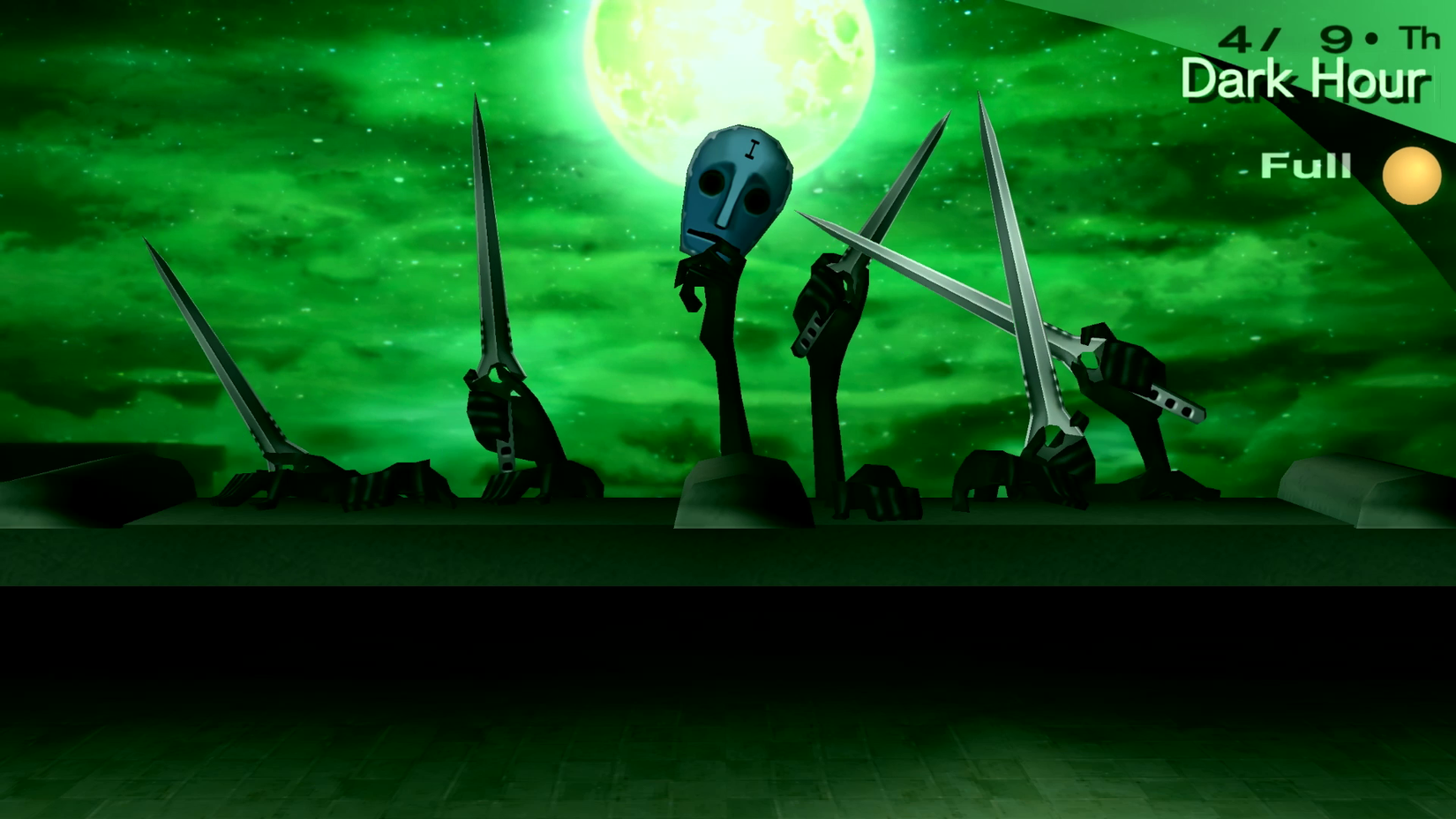 Image: Atlus
To work alongside its themes and setting, Persona 3 introduced two new mechanics: social links and social stats. The former are secondary objectives focused on developing relationships with other characters, while the latter represents the protagonist's ability across three different social dimensions. "Academics" indicates the character's formal education level; "Charm" reflects how others perceive them; and "Courage" gauges their posture toward situations. These three stats each have six tiers (i.e., Courage starts at "Timid" and goes all the way up to "Badass"), each representing the changes that happen to the character as they interact with the world around them.
Social stats, unlike the familiar RPG ones, increase as you engage with social activities, symbolizing the dialogical nature of human subjectivity. You earn Charm points by going to the movies or working at a specific shop, activities that affect how others see the main character. Academics levels up as to study in your room or play a quiz game, which forces your character to internalize and comprehend the knowledge they obtained from classes and books. Lastly, the character raises their Courage rank by going through experiences that are considered scary or intimidating, ranging from drinking a mysterious medicine offered by a nurse to singing karaoke.
Up until the release of Persona 3, the foundations of most JRPG characters could be traced back to traditional TTRPGs. These fundamentally understand their characters as individuals who, in addition to having their backstories and classes as parameters of their identity, are summarized by their attribute values, such as strength, intelligence, wisdom, dexterity, constitution, and charisma. In Dungeons & Dragons 5th edition Player's Handbook, it reads "take your character's ability scores [attributes] and race into account as you flesh out his or her appearance and personality. A very strong character with low Intelligence might think and behave very differently from a very smart character with low Strength."
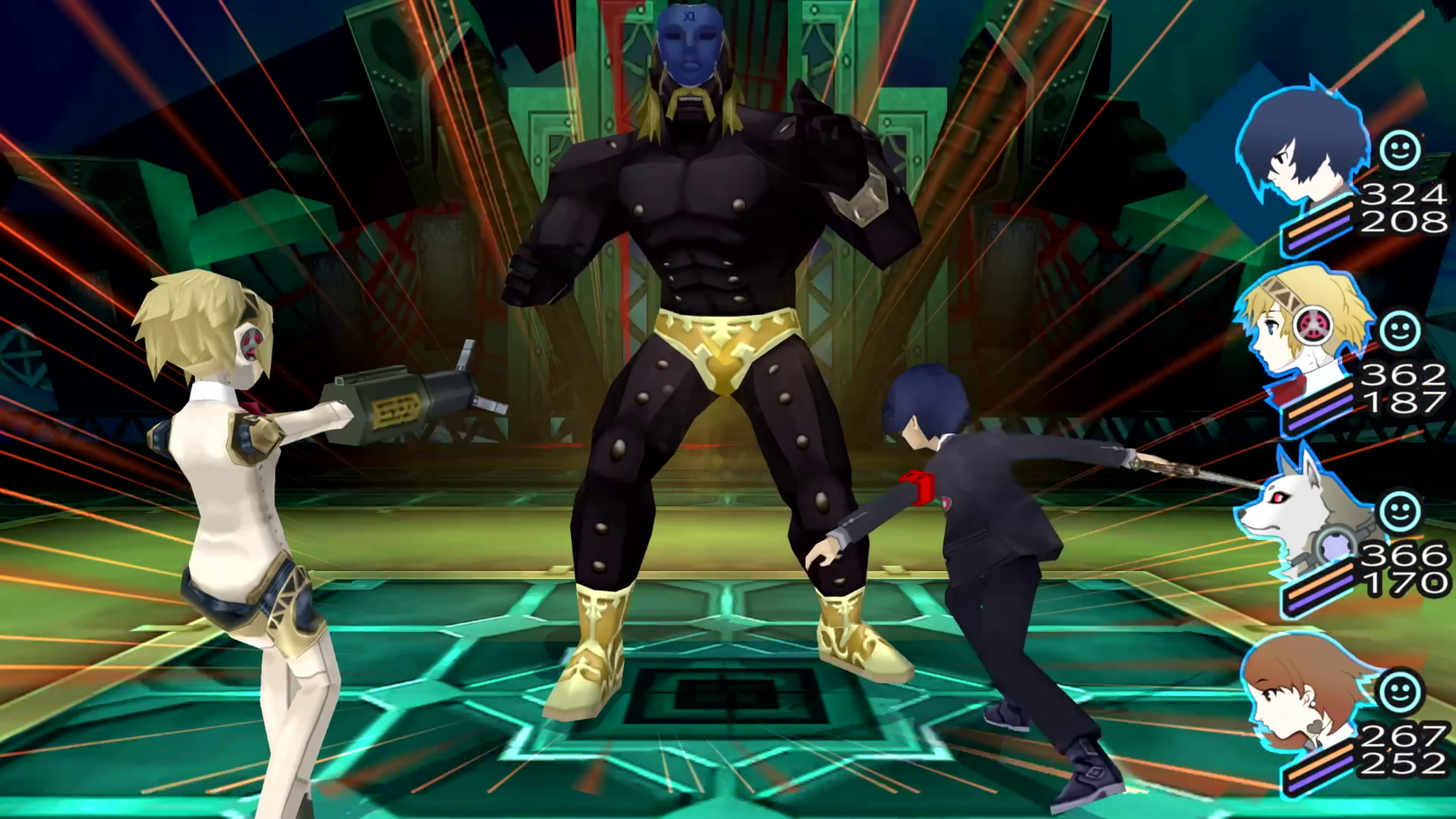 Image: Atlus
Although it's easy to understand on paper, in practice these traditional attributes only help us to make assumptions about a character. How does a high strength score make someone behave differently? What is the relationship between these attributes and a person’s social role and behavior? Traditional attributes are great for measuring physical and mental actions, but they lack the social dimension of a person. Even Charisma, which could be understood as the effect that unfolds from a character's interactions, turns into something that the character either has or does not have in the traditional TTRPG formula.
Persona 3's characters and creatures (the personas!) feature traditional attributes as well, but the game's social stats allows players to engage and experience a new and deeper level of character development, highlighting where they fit in alongside other people. The cast of Persona 3 is shaped by their interactions. Although games from other genres, like Tokimeki Memorial, had already explored different attributes to represent a character in an urban, modern scenario, Persona 3 showcased their storytelling potential.
In hindsight, these social stats feel rudimentary compared to what Studio Zero, headed by P3 directorKatsura Hashino, achieved years later in Metaphor Re:Fantazio. The 2024 game features a dramatically evolved version of this same system, with the Royal Virtues representing the attributes of a king-to-be. However, Persona 3 modernized the JRPG genre in the early 2000s by adding an extra layer to characters, making them more complex and closer to real life than we ever knew they could be.