'Futurama' Creator Officially Confirms the Sci-Fi Series' Surprising 2027 Plans
🎮 Multi-platformNews
#Interview#Futurama

'Futurama' Creator Officially Confirms the Sci-Fi Series' Surprising 2027 Plans

Polygon RSS Feed✍ Brian VanHooker⏱ 10 min read(about 3 hours ago)

Overview & Key Takeaways

Futurama producers Davis X. Cohen and Claudia Katz talk about the recent season of Futurama, plus what is still to come

Another day, another Futurama finale.

Released today on Hulu, "Final Ending: The Last Conclusion" is the season finale for Futurama (the show will be coming back next year with three specials) but it plays like a high-concept series finale. Turns out, that's because originally, it was.

“At the time we wrote the season finale, we did not know if the show would be going on again. So in our minds, that's a last episode ever, and we wrote it accordingly,” David X. Cohen, the longtime showrunner of Futurama who also co-developed the series with Matt Groening, tells Polygon.

The episode is about a movie that Fry and his brother, Yancy, attended when they were kids, back in the 20th century. They’d snuck into the PG-13 screening, but got kicked out before the ending. Now, in the 31st century, Fry is trying to find a copy of the movie to see how it ends. Really though, the entire episode is about the conceptof endings. Professor Farnsworth puts forth a theory as to why people crave endings, while the other members of the Planet Express crew have their own ending-related stories. And while there is more Futurama to come, this episode does mark the ending of this era of Futurama, which consisted of four seasons on Hulu beginning back in 2023.

Here, Cohen and executive producer Claudia Katz sit down with Polygon to discuss the finale, as well as the most recent season of the series. They also reveal some surprising details about next year's specials.

Warning: Spoilers ahead for the 2026 season of Futurama.

Futurama Fry Leela Images: 20th Century Studios

Before getting into the finale, I’d love to discuss the second-to-last episode, which was a crossover with Disenchantment**, Matt Groening's animated fantasy series. How did that come about?**

David X. Cohen: Matt pushed really hard for it because both things are close to his heart. It was very difficult because the shows are on different streamers — Netflix and Hulu — and we generously were granted permission to do it. My role was mainly to just make sure it played as an episode of Futurama, even if we brought in the Disenchantment characters. It worked out very nicely, because the nature of Futurama is, we're going to explore unknown planets and universes, so we can go to Dreamland. That makes sense in Futurama. It actually works better than crossovers normally work.

Claudia Katz: Matt really wanted to unite that Disenchantment trio at least one last time for fans. That was a big driver for him, to give that back to fans of Disenchantment.

Futurama Fry Yancy Image: 20th Century Studios

Getting to the season finale, did you know about the upcoming specials when you wrote it?

Cohen: One thing we take pride in at Futurama is that we have a lot of practice writing last episodes ever, which very few shows can say. At the time we wrote the season finale, we did not know if the show would be going on again. So in our minds, that's a last episode ever, and we wrote it accordingly. This was the sixth one that we've written in that form and we are now working on the seventh one.

But because we've done it so much, I've thought a lot about endings of stories, endings of series, and so this one is really an ending about the concept of endings. It's based on this idea I have that human beings actually evolved to need to know the ends of stories. The example I'll give you is, hundreds of thousands of years ago, when early humans started telling stories, if someone started to tell a story about a forest, some of the people in the troop wanted to hear the rest of that sentence, and some didn't care. Well, the ones who wanted to hear it could find out if there was a bear in the forest who was going to maul them to death, or if there was a tree that was covered with nutritious mangoes. So, I think that is an evolved need, like eating and breathing and reproduction, that humans have, to hear the end of stories.

Futurama Bender Image: 20th Century Television

The episode has a nice nod to “Meanwhile,” the 2013 series finale. I kind of took that as, Futurama may have many finales, but “Meanwhile” is the real finale. Is that how I was supposed to interpret that?

Cohen: I'm not sure how to answer that. That's a favorite and the emotion of that is just so intense and believable and it's one of our best. A thing you'll notice about that one, and what we try to do in general in our last episodes ever, is that I want people to think, if it is the last episode ever, that the world is still going on. Interesting, beautiful things are still happening and we may not see them, but they're still happening.

Katz: We were getting these two-season orders of 10 episodes each. So the finale of that first 10, we know is not going to be what might be our final series finale. But the finale of the second batch of 10, we often don't know and the writers do such an elegant job with that. With this finale, there's a bittersweetness to Futurama, which is really anchored in Fry disappearing. His whole family went on without him. They don't know what happened to him and never saw him again. So the ones where we throw back to that have an extra sweetness to them.

Cohen: There's something very emotional about time travel. If you go into the future, you leave things behind, and that's life. There are things you can't go back and fix or people you can't go back and see. It's intrinsically emotional.

Futrama Fry Leela Bender Image: 20th Century Studios

With these upcoming specials, is this a bit of a return to the direct-to-DVD era of Futurama from 2007 to 2009?

Cohen: It's a little different. When we wrote those DVD movies, we had our dual mandate: they had to be movies and they also had to break into perfect episodes. They rarely aired that way, but we had to write them that way.

We have more freedom this time to just make it a really big, cinematic, epic Futurama story, which is kinda nice because we're always trying to cram a movie into 22 minutes, and now we can actually spread things out and just do something that couldn't be done in 22 minutes. We are a little freer this time in the writing.

Was this new format desired in place of another season? Or was this more of a compromise?

Cohen: It was the outcome of a discussion with Hulu and Disney of, "What is good for the Futurama franchise at this point?" We have a lot of episodes, so the general outcome of the discussion was, "We want to have some special events to call attention to Futurama.” Like, "Hey, this gigantic thing is here. If you're a longtime fan, this is a special thing, or if you don't know about it, it is worth your time."

Katz: I think it's the ability to “eventize” — which is not our word — these specials.

Cohen: That way we get three premiere-type events, rather than getting the attention one time for a new season. And to mix it up after four straight seasons of doing the same thing.

Katz: Futurama is the perfect vehicle for features — like, real features — so what's exciting to me is, if that opens the door to features, even better.

Futurama Zoidberg Image: 20th Century Studios

You guys have adapted to a number of different storytelling styles over the various revivals. Is there anything unique about the upcoming specials?

Cohen: Yes. For the first one, we're taking on the whole idea of holiday spectacular movies, and we're able to mash it together into a huge thing. Bender has a romance with a talking snowman, for example, and we get to have a big, emotional farewell to Kwanzaabot, which incorporates the real-life fact that Coolio, who played Kwanzaabot, passed away. It's our first real big, epic holiday thing. We know we've had a chance to do some smaller ones, but this feels like a real holiday movie, and Rough Draft Studios is doing some out of the box animation techniques for it.

Katz: Yeah, there will be a little nod to some very classic Christmas special animation that is going to be pretty cool.

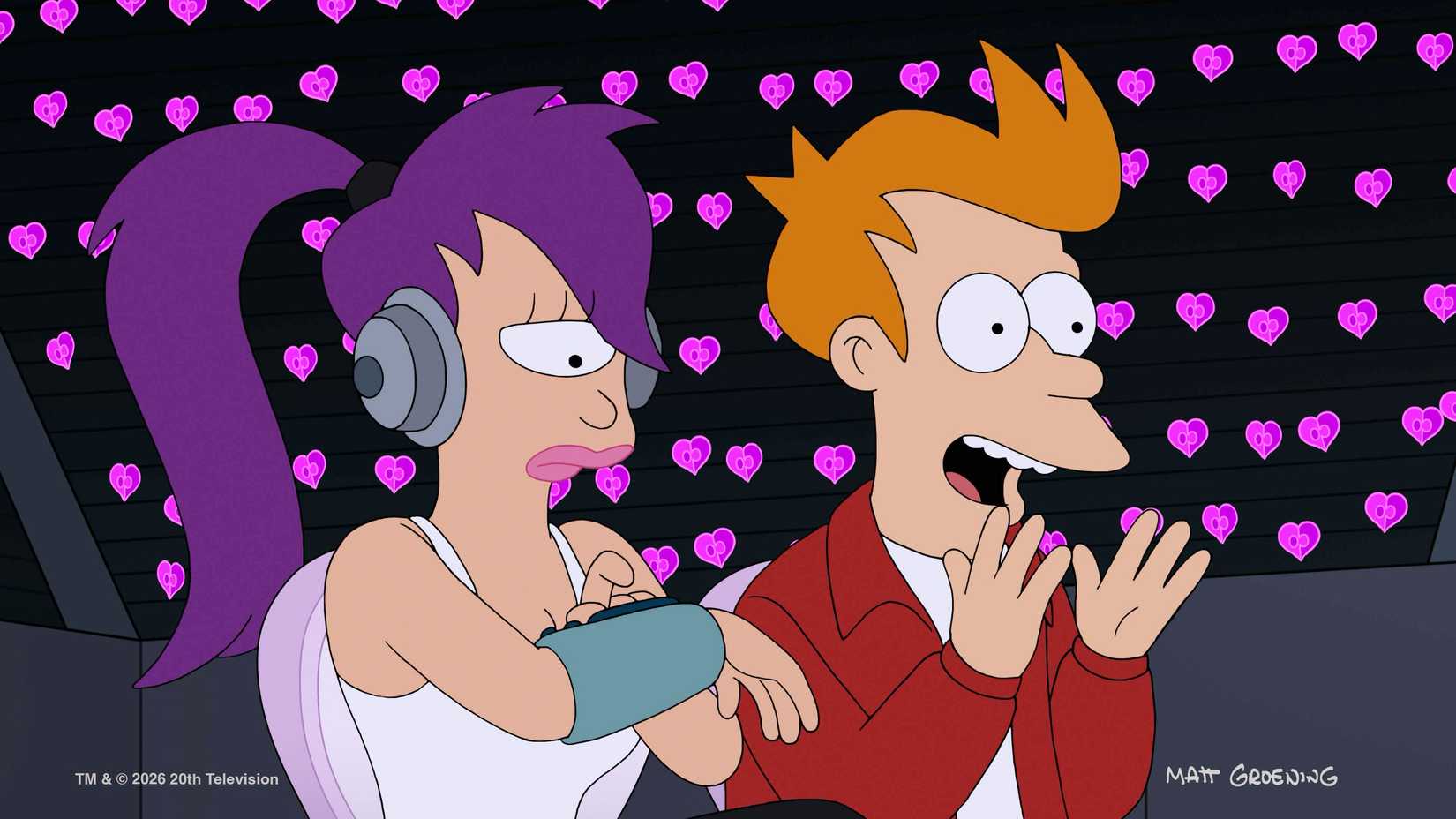
Cohen: There's a bit of a running theme through them, too, which is kind of the long-term, epic story of Fry and Leela's relationship and where that's going and what's getting in the way of it. So we are going to deal quite a bit with that in a way that, pays off the many years that we've been leading up to what's really going on there.

I don't want to give away too much because we're still writing the last one, but it's good.
futurama Image: Hulu/Disney/Everett Collection

For this past season that just ended, were there any episodes that felt like big personal accomplishments for each of you?

Cohen: The return of Marianne, Zoidberg's love interest. To me, that's a biggie and was very difficult. She's a fan favorite, so we had to handle it very carefully because we don't want to wreck something that people care about. We thought really long and hard about that. That's one I'm super proud of. That's one of my all-time favorite episodes in the history of the series. It's a beautiful, emotional story with Zoidberg and Marianne where we also learn more about why we haven't seen her that much. She's been off doing her studies and Zoidberg has been secretly supporting her with his few pennies. But there's also a second beautiful story about Hermes and his dad, so it's a very emotion-packed episode. Whenever we can pull off sci-fi craziness and bring a tear to people's eyes, those are the ones I'm proudest of.

Katz: I have to say, I love that Catfish Hunter episode. I grew up watching Every Which Way But Loose and Smokey and the Bandit movies. If I could have had Clyde the Orangutan as a pet, I would've given anything for that. So I just love that one.

Futurama Zoidberg Image: 20th Century Studios

This season, Nibbler got his first big story in a while. Can we talk about that?

Cohen: There's always a danger with Nibbler because, when Nibbler's involved, it's like the universe is at stake and we want to be careful not to go to that well too much because what really matters to us is our characters' emotions and interactions with each other. When Nibbler comes in and it's this grand thing, it also has to be a personal story that we really care about emotionally. You really can't pull that off every week, so we want it to be a special event when Nibbler gets involved.

With this one, this was such an event where we get to enjoy Leela's affection for her pet, while also caring about the fates of universes, which is Nibbler's business.

And if you're a Nibbler fan, rest assured the next series finale that we are at work on now will deal with the tie-in between the grand plan for the universe, and our characters' hopes and dreams. That's the perfect opportunity for Nibbler to step in, and he does.

Katz: I didn't even know that yet!

Cohen: Well, the script will be coming in any minute now.

Last question. What does Slurm taste like?

Cohen: It tastes like addictive.


Futurama is streaming on Hulu and Disney Plus.
Share:

More in Multi-platform

Toem 2 Is Somehow Even More Perfect Than Toem🖥 PC, Multi-platform

Toem 2 Is Somehow Even More Perfect Than Toem

Toem 2 is the sequel to the photo-themed puzzler and it perfects a formula that already had practically no flaws.

🎮 Toem 2
PolygonIndie, Newsabout 2 hours ago
Minecraft Dungeons 2 Goes from Good Baby Diablo to Great Junior Diablo🎮 PlayStation, Nintendo Switch, Xbox, Multi-platform

Minecraft Dungeons 2 Goes from Good Baby Diablo to Great Junior Diablo

Xbox and Mojang's sequel to the Minecraft dungeon-crawler enhances the original's simple action-RPG formula without overcomplicating it

🎮 Minecraft🎮 Diablo
PolygonNewsabout 2 hours ago
Minecraft Dungeons 2 Is More Ambitious, More Interesting, And More Flawed🎮 Multi-platform

Minecraft Dungeons 2 Is More Ambitious, More Interesting, And More Flawed

When Minecraft Dungeons launched in 2020, it was difficult to know exactly what to make of it, or where it stood in the franchise as a whole. One of the world's most popular games had been transformed into a Diablo-lite-style action-RPG, taking away the mining and crafting that give Minecraft its name. In its place was something far more straightforward: kill monsters, collect loot, and repeat. The simplicity of Minecraft Dungeons was both its greatest strength and its biggest weakness. Its streamlined gear system made it easy to understand, while its enchantments gradually introduced more interesting build possibilities. But its combat could feel a bit too basic. Minecraft Dungeons 2 feels like developers Mojang and Double Eleven focused their efforts with those limitations in mind. The sequel is far more honed in on what happens between the battles, with expanded inventory systems, more customization options, more reasons to explore, and--perhaps most importantly--a world that actually feels connected to the larger Minecraft universe. Dungeons felt like it deliberately separated itself from the main game, and that was partly the point. Mojang wanted to create an experience that couldn't be found in vanilla Minecraft, while still using recognizable mobs, environments, and items to make it feel familiar. https://www.youtube.com/watch?v=WD9GtlgU8c Dungeons 2 takes a bold and unusual approach that not many other large franchises could pull off. Its story brings the Sift dimension, which was created for this game but is also coming to the vanilla game in 2027. The Sift is accessed via a portal--a mechanic that will feel familiar to anyone who's played Minecraft--and houses an ethereal dimension with all-new environments, friendly mobs, and enemies. The Sift's being added to the base Minecraft game makes the relationship between the two games feel far more deliberate than it did in the first installment. It also allows Dungeons 2 to feel like a bigger part of the Minecraft universe, rather than a smaller branch forging its own path. As a result of that, Dungeons 2 made me particularly invested in its new dimension. As a Minecraft fan and veteran player, I was also intrigued about whether any of the narrative elements would be carried over to the main game. I walked around the Sift feeling like I was intruding on an unreleased Minecraft build, eager to check out the biomes, friendly mobs, enemies, and potential materials that can be found in the first new Minecraft dimension in a decade and a half. The Sift is the first Minecraft dimension outside of the Overworld that doesn't feel immediately hostile. In Dungeons 2 it's under threat, so there are hostile mobs to deal with, but the pearlescent lakes, muted blue, pink, and purple color palette, and mobs that cheekily poke their tongue out by way of greeting all lead to a very serene world, one that I'm excited to explore in vanilla Minecraft in 2027. By having multiple armor pieces, adding Enchantment Books, and having the ability to jump, Dungeons 2 is actually closer to the vanilla Minecraft experience than its predecessor. It feels almost unbelievable that the first Dungeons didn't include jumping, but Dungeons 2 does. This allows for a broader scope of exploration as you can hop up to hidden platforms to uncover chests, jump across gaps to reach previously inaccessible areas, and dutifully check behind waterfalls for hidden loot. It also adds the jump-attack combination, which allows for a more powerful attack that affects any enemies in range and provides another means of effectively dealing with groups of enemies. The storyline gives you something simple to care about. Your villager friends aren't just background characters wandering around and making "hmm" noises. They want to live peacefully, yet villains lurk around every corner determined to make that impossible. Every time they attempted to interfere with the villagers' attempts to live happily ever after, I found myself increasingly annoyed at them. It's not the deepest or most emotional narrative by any means, but Dungeons 2 understands that a straightforward story and likeable characters can work in tandem remarkably well. It's a notable improvement over the first game, where the story largely existed only to give you a reason to chase down the Arch-Illager. That's not the only area where Dungeons 2 improves upon its predecessor. The original Dungeons had an awkward economy that felt almost meaningless. You collected emeralds constantly but were limited in ways to spend them, with many options feeling worthless. In Dungeons 2, upgrading your gear at the Blacksmith improves your existing gear's stats substantially, while rolling for new gear at the town merchant has the potential to give you more powerful items to complement your build--especially if you've used Echo Shards to upgrade the merchant so he can offer stronger gear. Since the Blacksmith required rescuing in the original Dungeons, I somehow managed to miss his arrival in Dungeons 2. By the time I realized he was present in the sequel, I had already salvaged a considerable amount of gear that I probably would have kept had I known I could upgrade it. I'm undecided whether that's down to my campaign tunnel vision, or whether Mojang should have introduced him better. There is still a problem with this system, though. In placing a maximum cap of 9,999 emeralds, I regularly found myself losing them as I wasn't watching my balance when salvaging old items to exchange for more emeralds. Then, as it can often cost in excess of 1,000 emeralds to upgrade an item, I'd find myself struggling for the currency. A cap absolutely should exist, since it's so easy to get emeralds via exploration and salvage, and is part of what led to emeralds feeling worthless in the original game. But when that cap is making you regularly lose currency that you're actively trying to spend on upgrades, it shows that the economic balance isn't quite right. Where Dungeons 2 does excel hugely over its predecessor is in its willingness to allow you to establish a coherent build. Instead of one armor piece, you now equip a separate helmet, chest plate, leggings, and boots. This gives you more opportunities to shape your character around a particular playstyle, and I spent much of my playthrough experimenting with different combinations. I tried lightning-, poison-, and soul-focused builds, and each one changed the way I approached combat. The soul system was probably my biggest stumbling block. The game doesn't do a particularly good job of explaining what souls are, how you acquire them, or why you might want to build around them. I eventually worked it out through experimentation, but I shouldn't have needed to poke around quite as much just to discover something that is fundamental to an entire build archetype. Once you understand the systems, experimentation is enjoyable, but Dungeons 2 occasionally assumes that you know more than the game has actually taught you. A new type of equipment, Talismans, add another layer of build complexity. You can equip up to three at a time, and they grant you a passive ability--some summon other characters or creatures to fight alongside you, while others grant generous buffs to your health, attack power, ammo, and more. Amassing a decent collection of them relies on completing side quests and finding hidden loot, which isn't necessarily a bad thing, but it means players who rush through the main campaign are potentially missing some of the strongest tools they need to make more interesting builds. While the first game already had plenty of replay value through its difficulty levels, repeatable missions, hidden levels, and eventual DLC, Dungeons 2 expands upon that even further. There are side quests, dungeons, repeatable boss fights, and Soul Surge activities to complete beyond finishing the campaign. Soul Surge activities are time-limited events where stronger enemies spawn in an area, rewarding higher-tier loot that you can't get through normal gameplay. As a result, Dungeons 2 feels like an ongoing adventure rather than a campaign you complete and never return to. It also adds a purpose to the loot system. If you're trying to perfect a poison build, getting another piece of equipment is no longer about increasing your power; it's about improving the synergy between your individual gear pieces. The hunt for the perfect item to slot into your build is pretty moreish, and Dungeons 2 gives plenty of opportunities to do that after the story ends. However, there's a significant problem with the enchantment system. Enchantment Books are scarce, and I spent most of the main story limited to two of them for my armor pieces. You can use each book an infinite number of times, but in terms of build synergy, it's oddly restrictive. My favorite builds came way beyond the main campaign, and I didn't get that moment of feeling true satisfaction as my poison spread from mob to mob until many hours after I finished. Given the mob density throughout the story and the powerful bosses you face, it would have been more satisfying to discover a few more Enchantment Books as part of the storyline's rewards, instead of seeking them out post-game. However, being forced to explore Dungeons 2's gorgeous environments seeking out better loot is far from a terrible experience. Unfortunately, that wasn't the biggest problem I faced. My roughly 15-hour playthrough of the main campaign was affected by a number of bugs and glitches, with one particularly persistent issue leaving a "Teleporting" label permanently stuck to my character. It wasn't merely a cosmetic annoyance either, as the bug affected traversal, at times preventing me from jumping or safely navigating the environment. Restarting my game could temporarily resolve some of those problems, but the Teleporting label itself never disappeared, meaning I completed about half of my playthrough with the intrusion. For a game that places so much emphasis on exploration and movement through its expanded environments, having traversal occasionally break is a serious problem. It's particularly unfortunate because Dungeons 2's environments are beautiful, and being able to properly explore them is part of what separates this sequel from the more linear structure of the original. Hopefully these issues are addressed in a patch at launch, because they undermine what is otherwise a considerably more polished sequel. !(https://www.gamespot.com/wp-content/uploads/2026/09/39f9dc2.jpg?w=636) !(https://www.gamespot.com/wp-content/uploads/2026/09/1cb3463.jpg?w=636) !(https://www.gamespot.com/wp-content/uploads/2026/09/2d6486c.jpg?w=636) !(https://www.gamespot.com/wp-content/uploads/2026/09/362654e.jpg?w=636) !(https://www.gamespot.com/wp-content/uploads/2026/09/4a24576.jpg?w=636) !(https://www.gamespot.com/wp-content/uploads/2026/09/5591125.jpg?w=636) !(https://www.gamespot.com/wp-content/uploads/2026/09/695e95e.jpg?w=636) Dungeons 2 isn't a radical reinvention, and rightly so. The first game was already an enjoyable, approachable dungeon crawler, even if it was deliberately lightweight. Dungeons 2 adds depth and connects its world to the wider Minecraft universe while adding a meaningful economy, a build system with considerably more freedom to experiment, and more post-campaign activities. Even though the restrictive emerald cap, scarce Enchantment Books, and technical issues dampened my experience somewhat, the difference between the titles is clear. Where Minecraft Dungeons was a charming introduction to the dungeon-crawler genre, Dungeons 2 builds a deeper action-RPG within the same familiar, blocky framework. While it doesn't completely escape the limitations of its predecessor, Minecraft Dungeons 2 is a more ambitious sequel that finally gives its loot, builds, and world the depth that was missing, even if a few rough edges remain.

🎮 Minecraft🎮 Diablo
GameSpotReviewsabout 2 hours ago