Minecraft Dungeons 2 Is More Ambitious, More Interesting, And More Flawed
When Minecraft Dungeons launched in 2020, it was difficult to know exactly what to make of it, or where it stood in the franchise as a whole. One of the world's most popular games had been transformed into a Diablo-lite-style action-RPG, taking away the mining and crafting that give Minecraft its name. In its place was something far more straightforward: kill monsters, collect loot, and repeat.
The simplicity of Minecraft Dungeons was both its greatest strength and its biggest weakness. Its streamlined gear system made it easy to understand, while its enchantments gradually introduced more interesting build possibilities. But its combat could feel a bit too basic.
Minecraft Dungeons 2 feels like developers Mojang and Double Eleven focused their efforts with those limitations in mind. The sequel is far more honed in on what happens between the battles, with expanded inventory systems, more customization options, more reasons to explore, and--perhaps most importantly--a world that actually feels connected to the larger Minecraft universe.
Dungeons felt like it deliberately separated itself from the main game, and that was partly the point. Mojang wanted to create an experience that couldn't be found in vanilla Minecraft, while still using recognizable mobs, environments, and items to make it feel familiar.
https://www.youtube.com/watch?v=WD9GtlgU8c
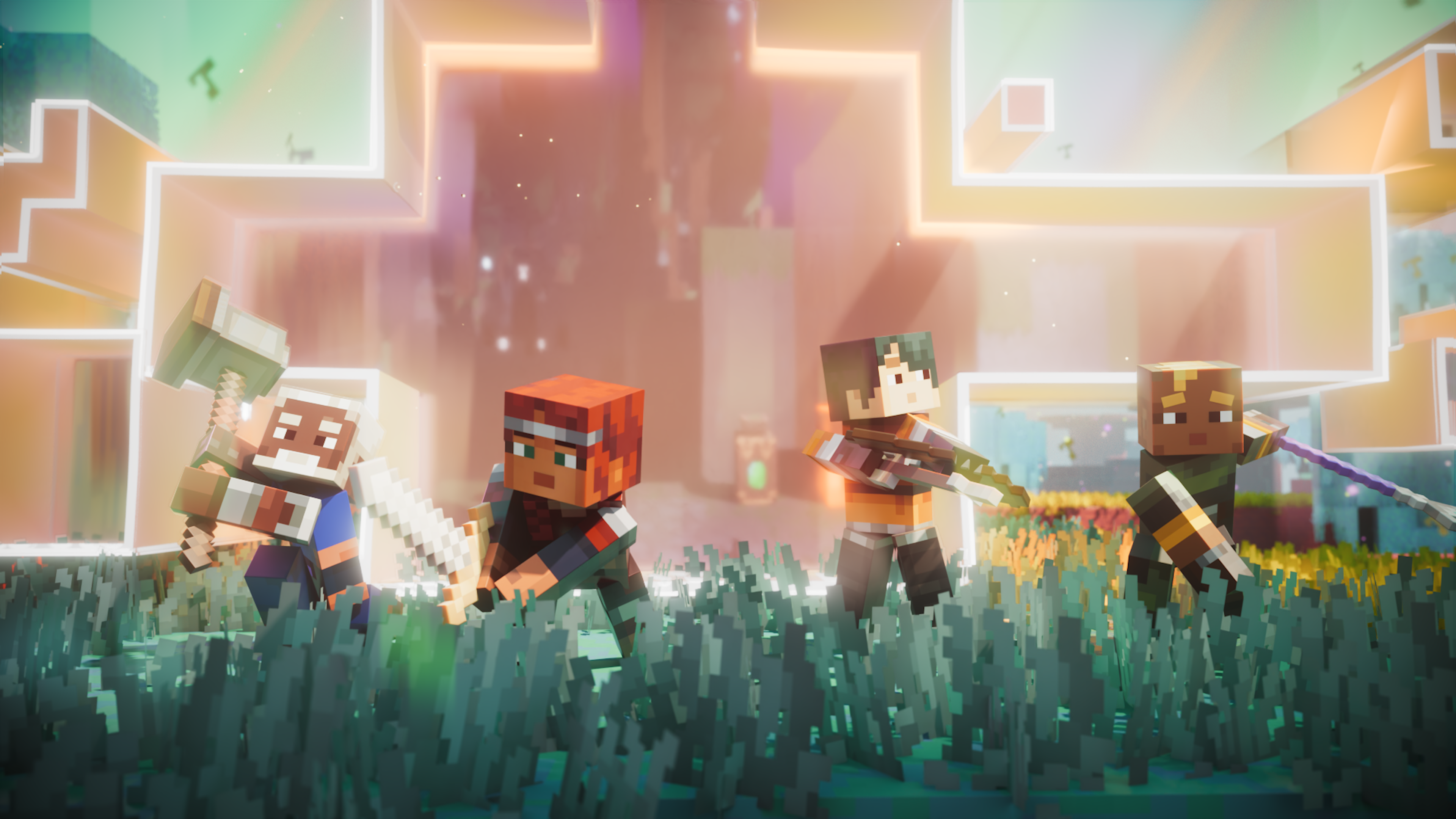
Dungeons 2 takes a bold and unusual approach that not many other large franchises could pull off. Its story brings the Sift dimension, which was created for this game but is also coming to the vanilla game in 2027. The Sift is accessed via a portal--a mechanic that will feel familiar to anyone who's played Minecraft--and houses an ethereal dimension with all-new environments, friendly mobs, and enemies. The Sift's being added to the base Minecraft game makes the relationship between the two games feel far more deliberate than it did in the first installment. It also allows Dungeons 2 to feel like a bigger part of the Minecraft universe, rather than a smaller branch forging its own path.
As a result of that, Dungeons 2 made me particularly invested in its new dimension. As a Minecraft fan and veteran player, I was also intrigued about whether any of the narrative elements would be carried over to the main game. I walked around the Sift feeling like I was intruding on an unreleased Minecraft build, eager to check out the biomes, friendly mobs, enemies, and potential materials that can be found in the first new Minecraft dimension in a decade and a half. The Sift is the first Minecraft dimension outside of the Overworld that doesn't feel immediately hostile. In Dungeons 2 it's under threat, so there are hostile mobs to deal with, but the pearlescent lakes, muted blue, pink, and purple color palette, and mobs that cheekily poke their tongue out by way of greeting all lead to a very serene world, one that I'm excited to explore in vanilla Minecraft in 2027.
By having multiple armor pieces, adding Enchantment Books, and having the ability to jump, Dungeons 2 is actually closer to the vanilla Minecraft experience than its predecessor. It feels almost unbelievable that the first Dungeons didn't include jumping, but Dungeons 2 does. This allows for a broader scope of exploration as you can hop up to hidden platforms to uncover chests, jump across gaps to reach previously inaccessible areas, and dutifully check behind waterfalls for hidden loot. It also adds the jump-attack combination, which allows for a more powerful attack that affects any enemies in range and provides another means of effectively dealing with groups of enemies.
The storyline gives you something simple to care about. Your villager friends aren't just background characters wandering around and making "hmm" noises. They want to live peacefully, yet villains lurk around every corner determined to make that impossible. Every time they attempted to interfere with the villagers' attempts to live happily ever after, I found myself increasingly annoyed at them. It's not the deepest or most emotional narrative by any means, but Dungeons 2 understands that a straightforward story and likeable characters can work in tandem remarkably well. It's a notable improvement over the first game, where the story largely existed only to give you a reason to chase down the Arch-Illager.
That's not the only area where Dungeons 2 improves upon its predecessor. The original Dungeons had an awkward economy that felt almost meaningless. You collected emeralds constantly but were limited in ways to spend them, with many options feeling worthless. In Dungeons 2, upgrading your gear at the Blacksmith improves your existing gear's stats substantially, while rolling for new gear at the town merchant has the potential to give you more powerful items to complement your build--especially if you've used Echo Shards to upgrade the merchant so he can offer stronger gear.
Since the Blacksmith required rescuing in the original Dungeons, I somehow managed to miss his arrival in Dungeons 2. By the time I realized he was present in the sequel, I had already salvaged a considerable amount of gear that I probably would have kept had I known I could upgrade it. I'm undecided whether that's down to my campaign tunnel vision, or whether Mojang should have introduced him better.
There is still a problem with this system, though. In placing a maximum cap of 9,999 emeralds, I regularly found myself losing them as I wasn't watching my balance when salvaging old items to exchange for more emeralds. Then, as it can often cost in excess of 1,000 emeralds to upgrade an item, I'd find myself struggling for the currency. A cap absolutely should exist, since it's so easy to get emeralds via exploration and salvage, and is part of what led to emeralds feeling worthless in the original game. But when that cap is making you regularly lose currency that you're actively trying to spend on upgrades, it shows that the economic balance isn't quite right.
Where Dungeons 2 does excel hugely over its predecessor is in its willingness to allow you to establish a coherent build. Instead of one armor piece, you now equip a separate helmet, chest plate, leggings, and boots. This gives you more opportunities to shape your character around a particular playstyle, and I spent much of my playthrough experimenting with different combinations. I tried lightning-, poison-, and soul-focused builds, and each one changed the way I approached combat.
The soul system was probably my biggest stumbling block. The game doesn't do a particularly good job of explaining what souls are, how you acquire them, or why you might want to build around them. I eventually worked it out through experimentation, but I shouldn't have needed to poke around quite as much just to discover something that is fundamental to an entire build archetype. Once you understand the systems, experimentation is enjoyable, but Dungeons 2 occasionally assumes that you know more than the game has actually taught you.
A new type of equipment, Talismans, add another layer of build complexity. You can equip up to three at a time, and they grant you a passive ability--some summon other characters or creatures to fight alongside you, while others grant generous buffs to your health, attack power, ammo, and more. Amassing a decent collection of them relies on completing side quests and finding hidden loot, which isn't necessarily a bad thing, but it means players who rush through the main campaign are potentially missing some of the strongest tools they need to make more interesting builds.
While the first game already had plenty of replay value through its difficulty levels, repeatable missions, hidden levels, and eventual DLC, Dungeons 2 expands upon that even further. There are side quests, dungeons, repeatable boss fights, and Soul Surge activities to complete beyond finishing the campaign. Soul Surge activities are time-limited events where stronger enemies spawn in an area, rewarding higher-tier loot that you can't get through normal gameplay. As a result, Dungeons 2 feels like an ongoing adventure rather than a campaign you complete and never return to.
It also adds a purpose to the loot system. If you're trying to perfect a poison build, getting another piece of equipment is no longer about increasing your power; it's about improving the synergy between your individual gear pieces. The hunt for the perfect item to slot into your build is pretty moreish, and Dungeons 2 gives plenty of opportunities to do that after the story ends.
However, there's a significant problem with the enchantment system. Enchantment Books are scarce, and I spent most of the main story limited to two of them for my armor pieces. You can use each book an infinite number of times, but in terms of build synergy, it's oddly restrictive. My favorite builds came way beyond the main campaign, and I didn't get that moment of feeling true satisfaction as my poison spread from mob to mob until many hours after I finished. Given the mob density throughout the story and the powerful bosses you face, it would have been more satisfying to discover a few more Enchantment Books as part of the storyline's rewards, instead of seeking them out post-game. However, being forced to explore Dungeons 2's gorgeous environments seeking out better loot is far from a terrible experience.
Unfortunately, that wasn't the biggest problem I faced. My roughly 15-hour playthrough of the main campaign was affected by a number of bugs and glitches, with one particularly persistent issue leaving a "Teleporting" label permanently stuck to my character. It wasn't merely a cosmetic annoyance either, as the bug affected traversal, at times preventing me from jumping or safely navigating the environment. Restarting my game could temporarily resolve some of those problems, but the Teleporting label itself never disappeared, meaning I completed about half of my playthrough with the intrusion.
For a game that places so much emphasis on exploration and movement through its expanded environments, having traversal occasionally break is a serious problem. It's particularly unfortunate because Dungeons 2's environments are beautiful, and being able to properly explore them is part of what separates this sequel from the more linear structure of the original. Hopefully these issues are addressed in a patch at launch, because they undermine what is otherwise a considerably more polished sequel.
!(https://www.gamespot.com/wp-content/uploads/2026/09/39f9dc2.jpg?w=636)
!(https://www.gamespot.com/wp-content/uploads/2026/09/1cb3463.jpg?w=636)
!(https://www.gamespot.com/wp-content/uploads/2026/09/2d6486c.jpg?w=636)
!(https://www.gamespot.com/wp-content/uploads/2026/09/362654e.jpg?w=636)
!(https://www.gamespot.com/wp-content/uploads/2026/09/4a24576.jpg?w=636)
!(https://www.gamespot.com/wp-content/uploads/2026/09/5591125.jpg?w=636)
!(https://www.gamespot.com/wp-content/uploads/2026/09/695e95e.jpg?w=636)
Dungeons 2 isn't a radical reinvention, and rightly so. The first game was already an enjoyable, approachable dungeon crawler, even if it was deliberately lightweight. Dungeons 2 adds depth and connects its world to the wider Minecraft universe while adding a meaningful economy, a build system with considerably more freedom to experiment, and more post-campaign activities.
Even though the restrictive emerald cap, scarce Enchantment Books, and technical issues dampened my experience somewhat, the difference between the titles is clear. Where Minecraft Dungeons was a charming introduction to the dungeon-crawler genre, Dungeons 2 builds a deeper action-RPG within the same familiar, blocky framework. While it doesn't completely escape the limitations of its predecessor, Minecraft Dungeons 2 is a more ambitious sequel that finally gives its loot, builds, and world the depth that was missing, even if a few rough edges remain.
🎮 Minecraft🎮 Diablo
GameSpotReviewsabout 2 hours ago