
Magic’s 10 Best Alchemy Cards, Ranked Worst to Best
Overview & Key Takeaways
From Power Nine shenanigans to some of Arena’s most broken digital designs, these are Alchemy’s 10 most memorable cards.
The most polarizing experiment in Magic: The Gathering history is drawing to a close. When Wizards of the Coast launched Alchemy on MTG Arena in 2021, it promised a digital-native frontier, a platform where cards could be rebalanced overnight and mechanics like Conjure, Seek, and Perpetual could operate unburdened by tabletop constraints. Now, with Wizards officially setting the format's retirement for early 2027, *Arena’*s most ambitious design sandbox is entering its final chapter.
Love it or hate it, Alchemy fundamentally expanded Magic’s mechanical lexicon. It proved a digital platform that could just as easily test ideas physically impossible on cardboard as much as it simulated paper play. Drafting the Power Nine from thin air, altering card stats permanently across zones, and directly patching first-player win-rate disparities horrified MTG purists, yet it also gave digital players a hyper-evolving metagame that embraced software's speed.
Though the dedicated queue is sunsetting, Alchemy’s digital footprint will endure across formats like Historic, Timeless, and Brawl. To understand this chaotic era of digital card design, let’s take a peek at some of the cards that defined it. From format-warping value engines to brilliant structural fixes, here are the 10 cards that best encapsulate Magic's Alchemy experiment.
10 Forsaken Crossroads — Alchemy: Innistrad
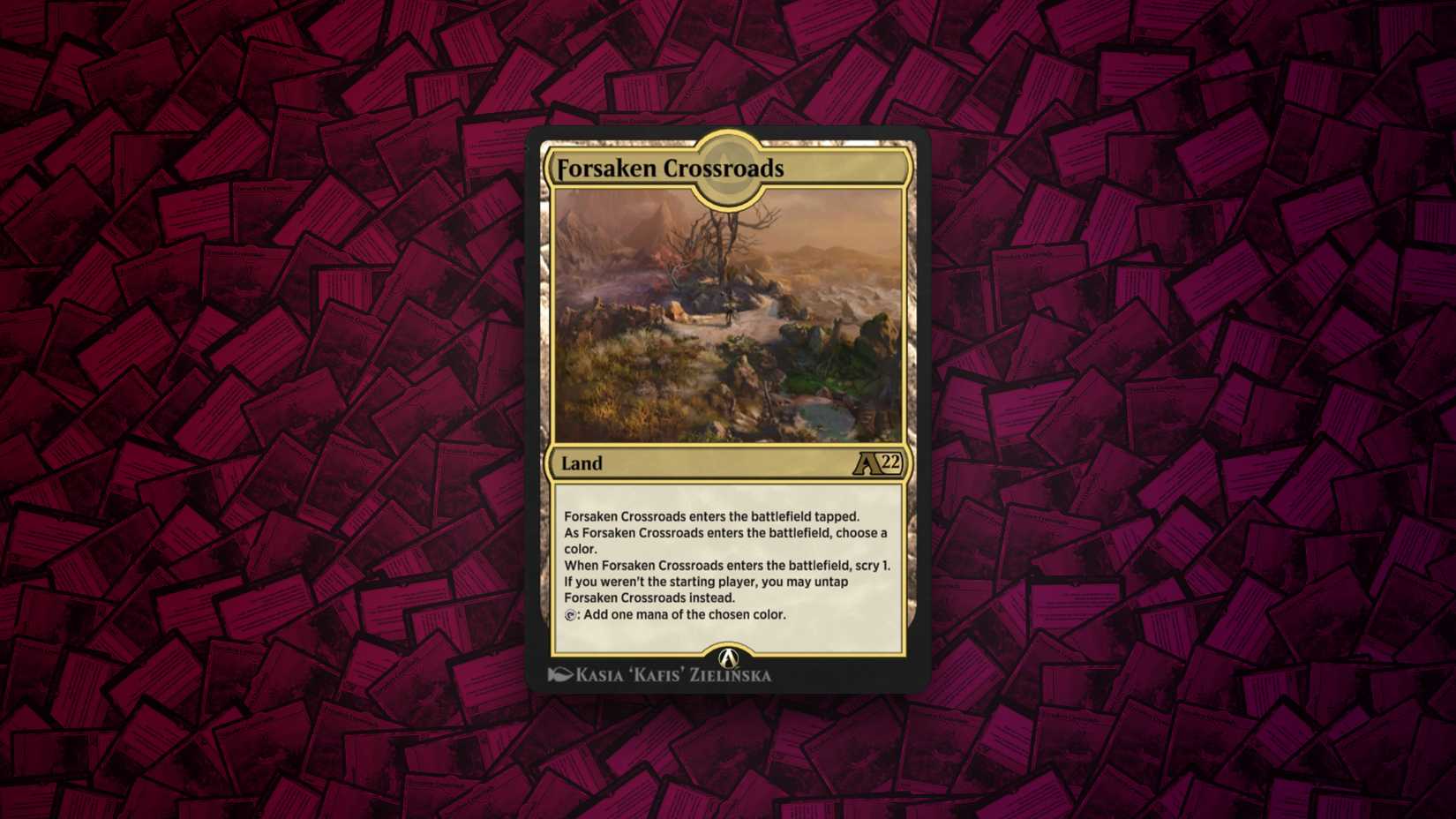 Image: Wizards of the Coast
Forsaken Crossroads may be the least exciting card on this list to look at, but it’s also one that best explains why Alchemy was willing to experiment with the fundamentals of Magic. The land enters tapped, lets you choose a color, and you scry when it enters; if you're not the starting player, you may untap it immediately. In other words, Forsaken Crossroads is a land specifically designed to address the disadvantage of going second. That's an unusual thing for a Magic card to acknowledge so directly. Instead of pretending that the play/draw imbalance doesn't exist, Alchemy designed a card around it.
Forsaken Crossroads became useful far outside Alchemy, appearing in Historic, Brawl, and other Arena environments. It isn't a card that wins games by itself, of course, but that's exactly why it’s such a good fit for this list. Alchemy wasn't only about making broken cards; sometimes its most interesting ideas were surprisingly subtle.
9 Symmetry Sage — Adventures in the Forgotten Realms
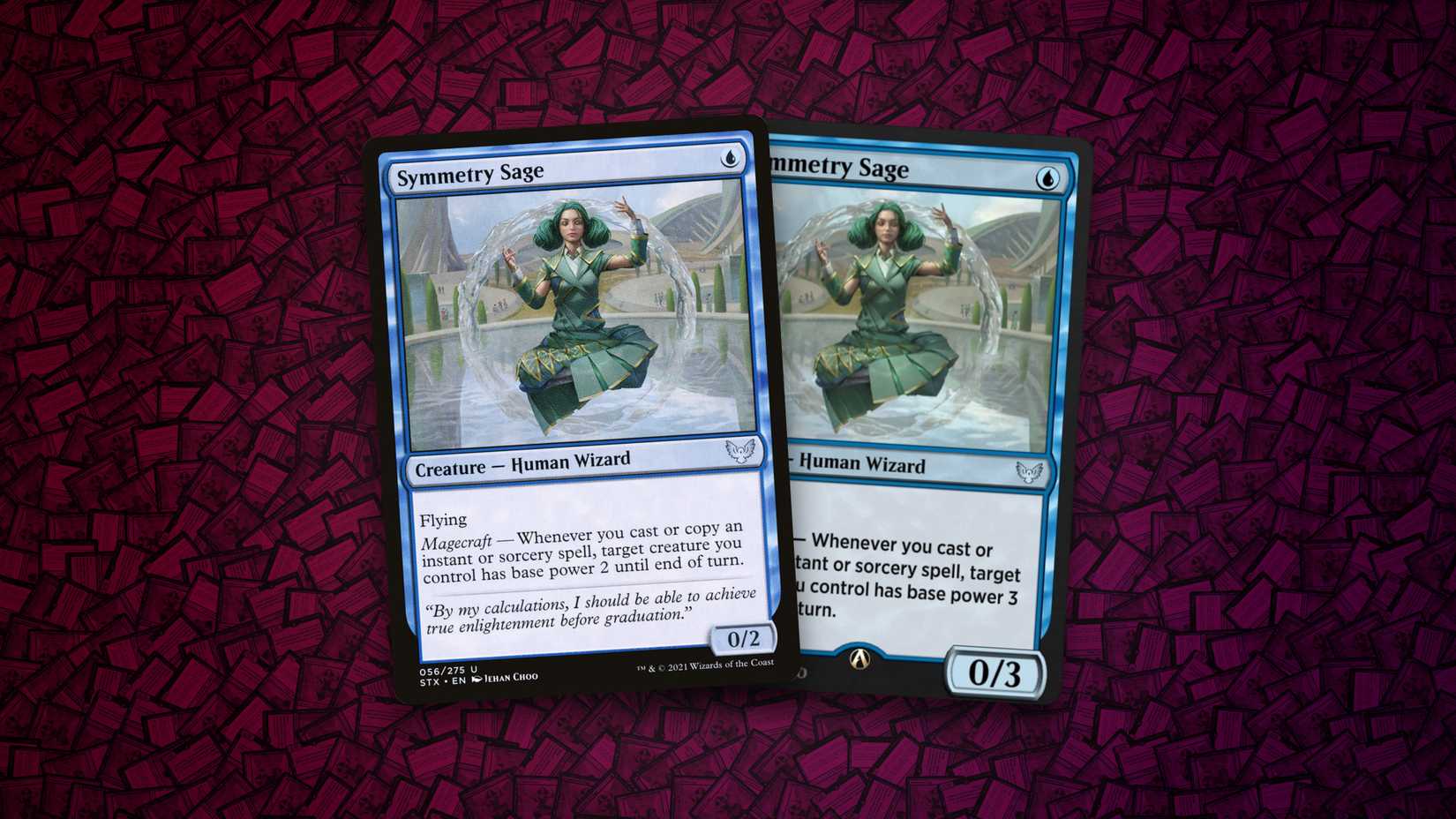 Image: Wizards of the Coast
Marking the first entry on this list that isn't an Alchemy exclusive, Symmetry Sage is inseparable from the format’s approach to rebalancing. Wizards changed the digital version from a 0/2 into a 0/3 and increased the power it could grant to another creature through its Magecraft effect, which buffs a creature to base power 3 whenever you cast or copy an instant or sorcery. The change effectively turned what was already an interesting one-drop into a far more threatening piece for blue aggressive decks.
Symmetry Sage is exactly what makes Alchemy so fascinating. Wizards could effectively create a different version of a card for digital formats without changing the physical version sitting in someone's collection. The card went on to matter most in Historic, particularly alongside cheap wizard creatures that could take advantage of its power-setting ability. It therefore represents another side of Alchemy's legacy — not a card invented for the format, but a demonstration of how digital rebalancing could alter the competitive identity of an existing Magic card.
8 Fragment Reality — Alchemy: Kamigawa
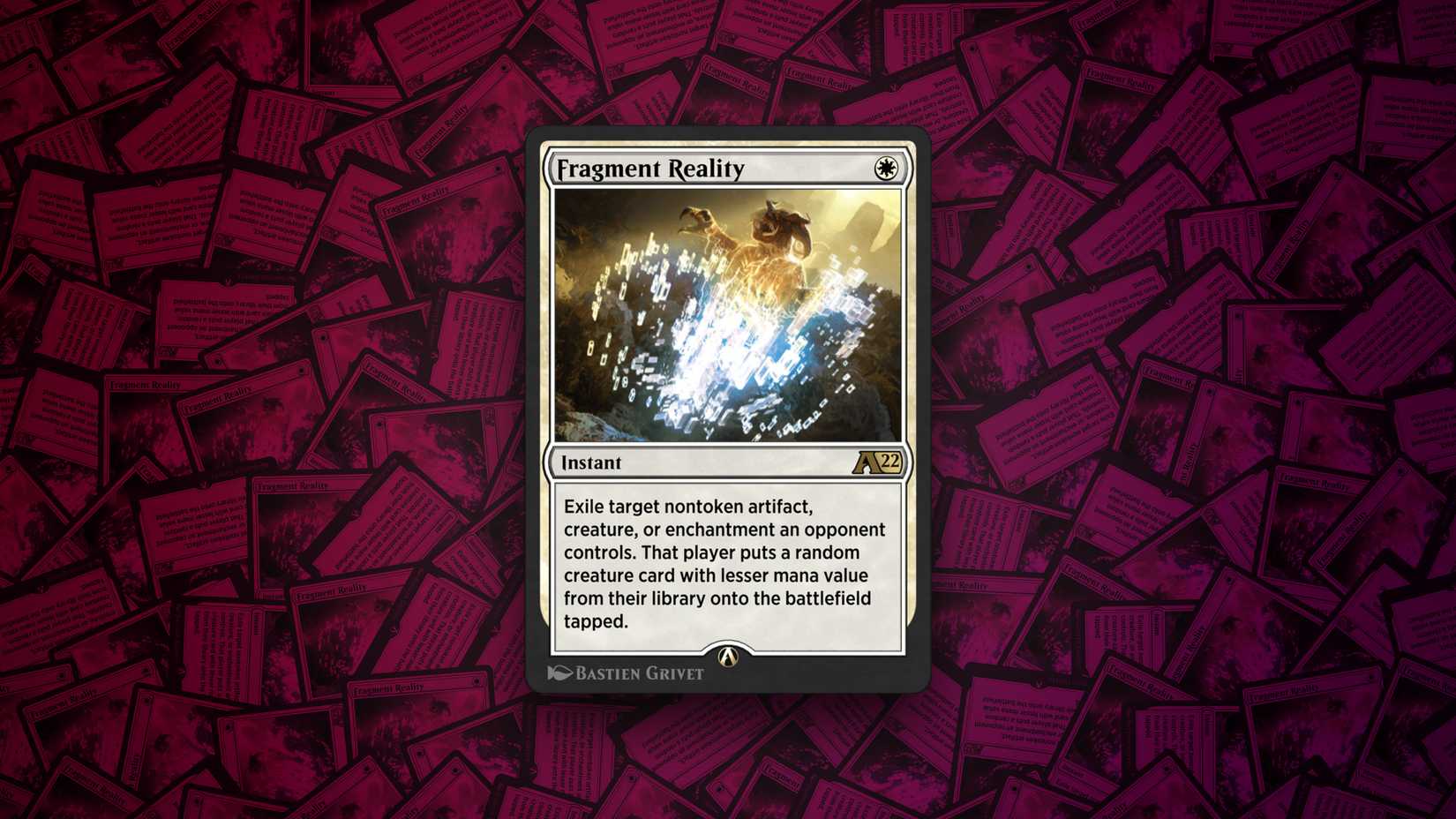 Image: Wizards of the Coast
What happens when you take one of *Magic'*s most powerful effects and give it an appropriately weird Alchemy drawback? Fragment Reality. For a single white mana, the instant can exile a nontoken artifact, creature, or enchantment, but (much like Generous Gift, Path to Exile, and Chaos Warp) the opponent gets a random creature card with lower mana valye from their library. That tradeoff is the entire point. You aren't simply removing a permanent; you're gambling that whatever replaces it will be less threatening than what you just exiled.
Despite that drawback, the efficiency was so extreme that Fragment Reality became relevant well beyond Alchemy itself. Wizards eventually rebalanced the card after a particularly nasty interaction with Leyline options that created a powerful and consistent Historic and Timeless strategy, changing it so that it could only target an opponent's permanent. Few cards better demonstrate how Alchemy was balanced around interactions that could be adjusted digitally after the fact.
7 Fearsome Whelp — Alchemy: Innistrad
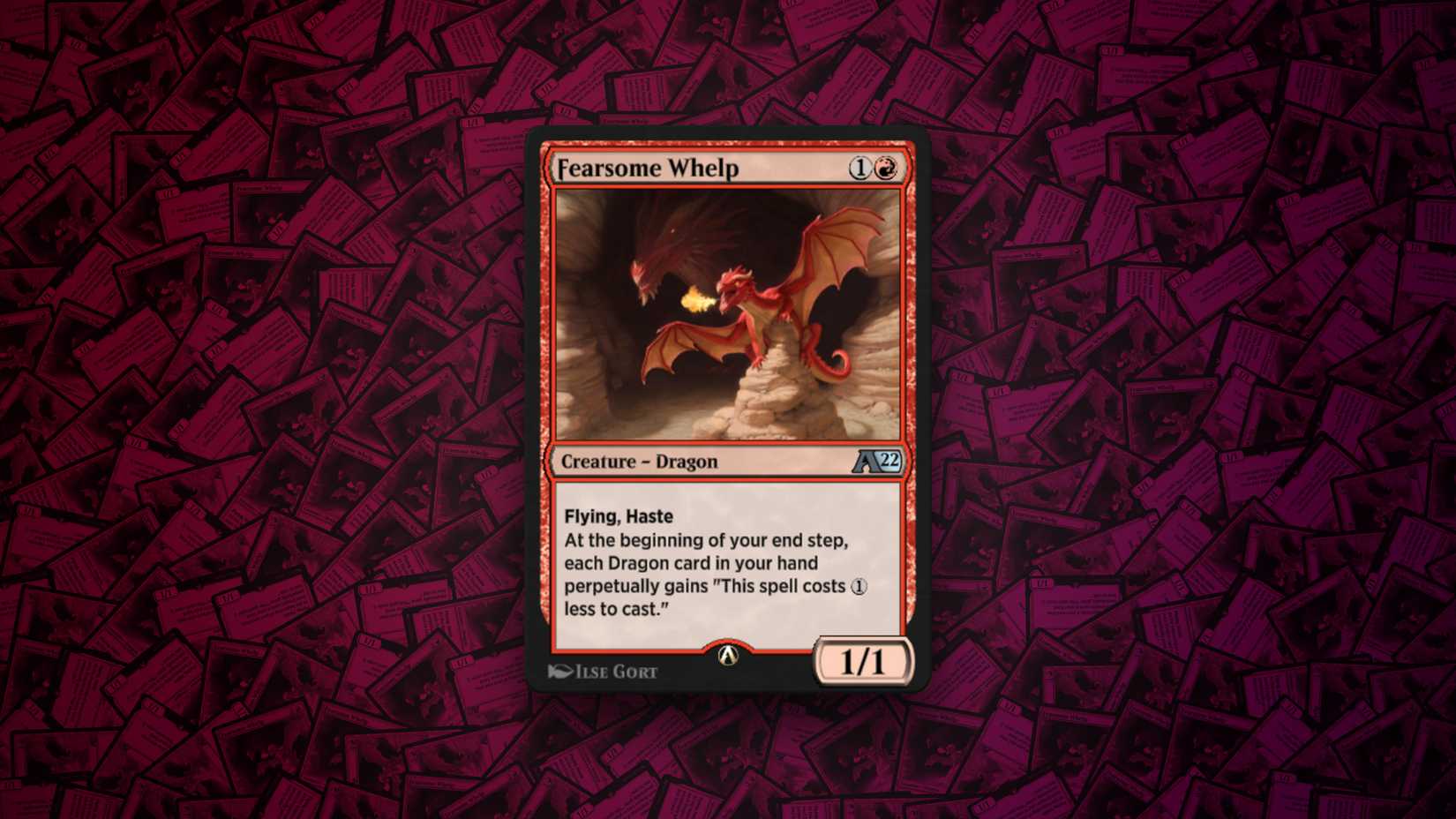 Image: Wizards of the Coast
Fearsome Whelp doesn't look particularly terrifying until you consider what its ability does over several turns. At the beginning of your end step, the creature can permanently reduce the cost of dragon spells in your hand. It’s a tired, tried-and-true effect found on a multitude of cards, from Dragonspeaker Shaman to the Ur-Dragon. But if your opponents happen to leave the Whelp alive after several turns, suddenly those dragons you've been collecting all game become dramatically cheaper, as the effect can snowball over the course of play.
The Whelp’s effect is exactly the kind of ability Alchemy was designed to explore, taking the familiar idea of a tribal cost reducer and making its impact permanent through digital mechanics. Wizards even included Fearsome Whelp among the early cards it chose to rebalance, a good indication of how quickly the effect could become problematic. It may not be Alchemy's flashiest creature, but it captures the format's appetite for cards that become much stronger the longer they survive.
6 Inquisitor Captain — Alchemy: Innistrad
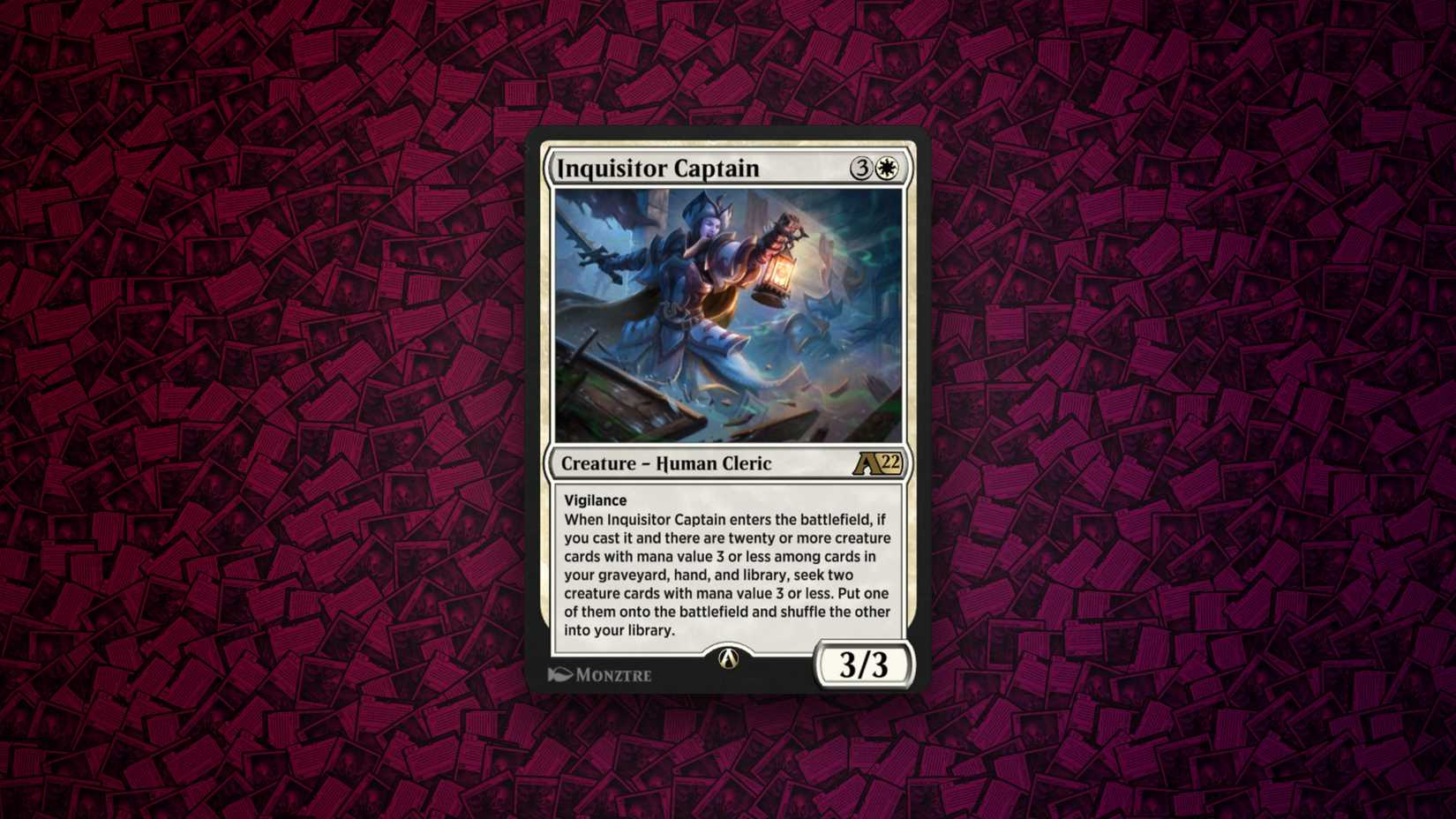 Image: Wizards of the Coast
Inquisitor Captain looks harmless on paper, but the right deck can turn it into a four-mana value explosion. Its ability checks for a huge collection of cheap creatures across your graveyard, hand, and library, then uses Seek to find two qualifying creatures, putting one onto the battlefield and the other back into your library. It’s the type of card that rewards you for going all-in on cheap creatures, turning a crowded deck into an instant source of value.
The Captain became a showcase for how Alchemy's digital mechanics could produce interactions that were much harder to predict than those of ordinary Magic cards. Wizards eventually rebalanced it alongside a number of other early Alchemy cards, like Town-Razer Tyrant, Goldspan Dragon, and the aforementioned Fearsome Whelp. Even after those changes, though, the basic idea of building your deck around a density of cheap creatures, then letting a single four-mana creature turn that density into a sudden burst of board presence, is rather fascinating and not something you’ll often find in the traditional version.
5 Oracle of the Alpha — Alchemy: Dominaria
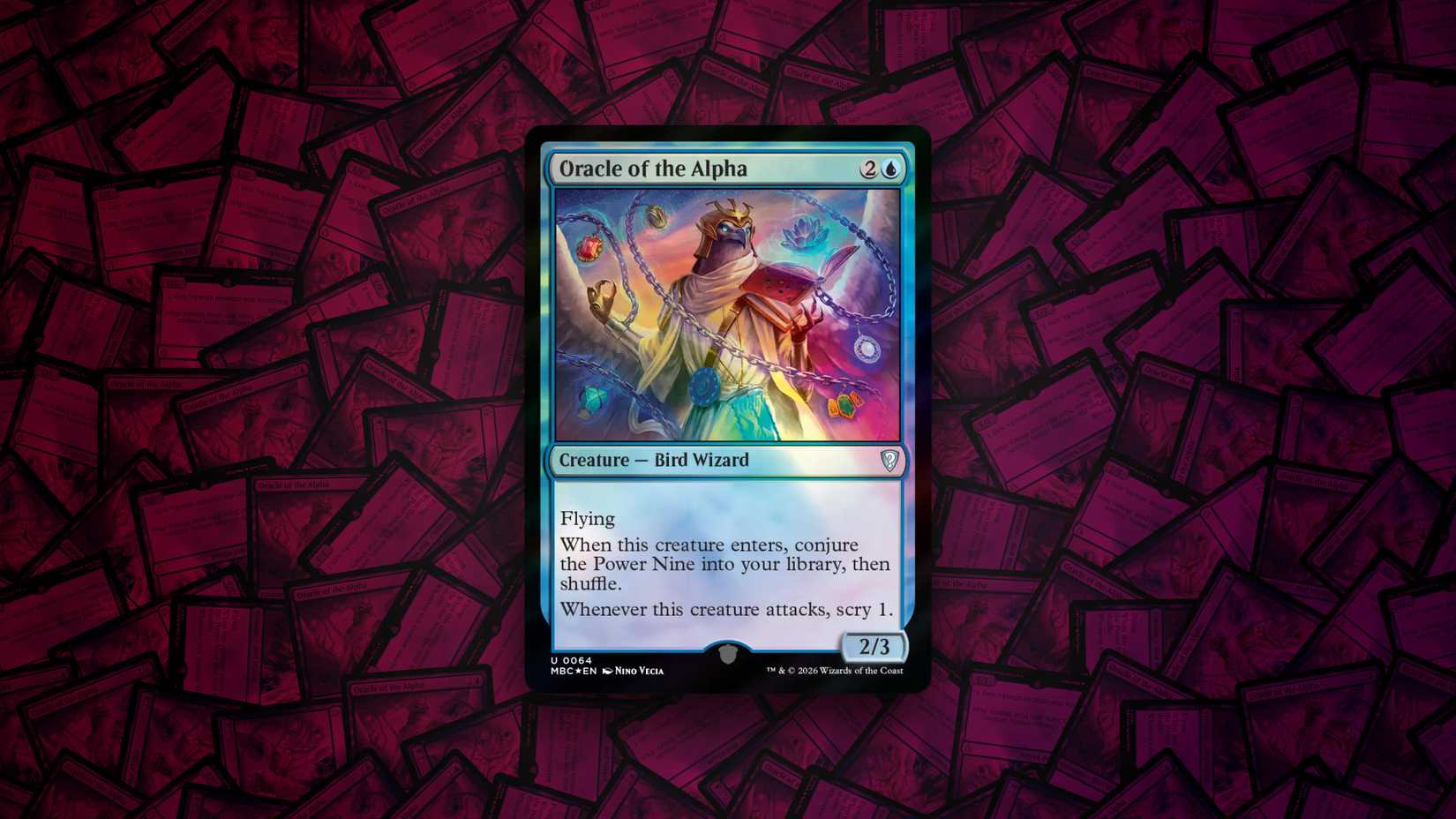 Image: Wizards of the Coast
There are plenty of powerful Alchemy cards, but very few can say they put the Power Nine into your deck like Oracle of the Alpha. When this three-mana blue bird wizard enters the battlefield, it conjures Ancestral Recall, Black Lotus, the five Moxen, Timetwister, and Time Walk ans shuffles them into your library. It’s a bit ridiculous on purpose. The Power Nine are some of the most famous and inaccessible cards in Magic's history, and Alchemy simply decided that, in a digital environment, there was no reason you couldn't occasionally play with them.
Oracle isn't necessarily the most efficient creature on this list, but that's almost beside the point. Its existence captures the freedom of *Arena'*s digital card pool better than almost anything else. It’s a card that obviously could never function normally in sanctioned tabletop Magic, which is precisely why it belongs among Alchemy's most memorable creations.
4 Key to the Archive — Alchemy: Innistrad
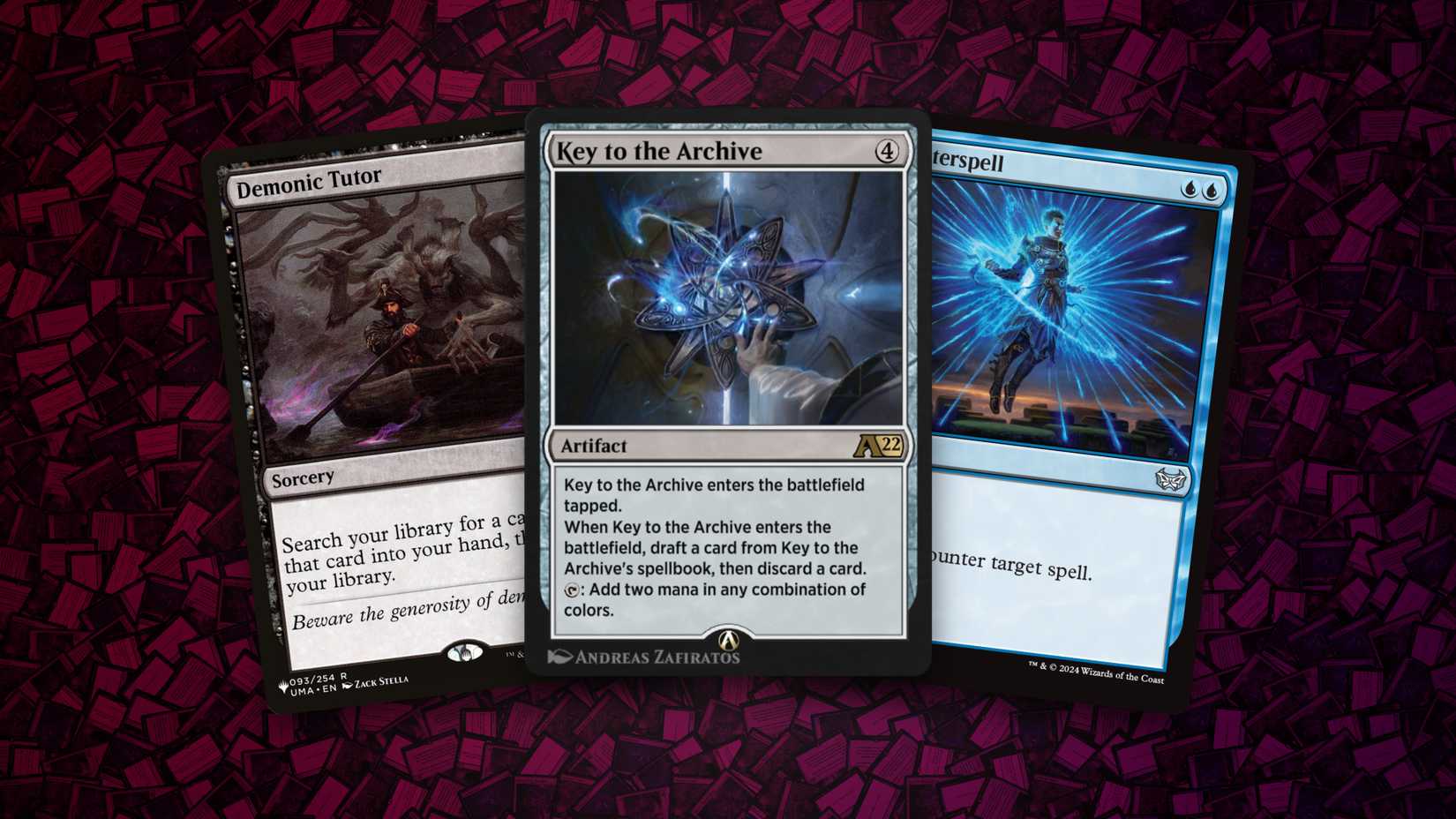 Image: Wizards of the Coast
Key to the Archive might be the single best advertisement for Alchemy's spellbook mechanic. At four mana, the artifact is already a useful source of colored land, but its real appeal comes from the curated selection of cards it can offer upon entering the battlefield. Its spellbook includes absurdly powerful options, such as Demonic Tutor, Time Warp, Counterspell, Day of Judgment, and Lightning Bolt.
You don't know exactly what you'll get, which keeps the card from functioning like a traditional tutor, but every activation gives you access to spells that can completely change the texture of a game. Key to the Archive feels less like a traditional artifact and more like Alchemy opening a tiny portal into *Magic'*s enormous back catalog.
3 Town-Razer Tyrant — Alchemy: Innistrad
 Image: Wizards of the Coast
Town-Razer Tyrant was one of the earliest Alchemy cards to demonstrate just how far the format could stretch Magic’s traditional design boundaries. The four-mana dragon targets an opponent's nonbasic land upon entering and turns it into a ticking time bomb: sacrifice the land or take damage. That's already a nasty bit of land disruption, but the card became particularly notorious because it could punish multicolor decks that relied heavily on their mana bases.
Wizards ended up rebalancing the aptly named Tyrant more than once, eventually limiting its ability to nonbasic lands and moving the damage trigger from the opponent's upkeep to the end step. Those changes are part of what makes Town-Razer such a good snapshot of early Alchemy. It was a card that demonstrated how digital rebalancing could let Wizards experiment with effects that would be much harder to change once they'd been printed on paper.
Get Polygon’s Wishlister newsletter
A weekly cheat sheet to what you’ll eventually love to play. No buying, no commitment — just saving for later.
Free. Unsubscribe anytime.
2 Rusko, Clockmaker — Alchemy: The Brothers’ War
 Image: Wizards of the Coast
Rusko, Clockmaker is Alchemy distilled into one strange and deeply annoying package. The four-mana 3/3 creature doesn't merely generate value when it enters the battlefield; it conjures a Midnight Clock and keeps turning noncreature spells into additional resources. Every time you cast a noncreature, Rusko's engine rewards you with another Clock trigger while draining your opponent and raising your life total. Such a brutal combination made it remarkably difficult to race or grind out.
More importantly, Rusko demonstrates why digital-only Magic can feel so different from tabletop Magic. The card is built around conjuring and repeatable digital effects that would be awkward, or simply impossible, to execute physically. The Clockmaker eventually became a particularly notorious card in Historic and Brawl, but its roots are firmly set in Alchemy, representing the format's willingness to make an entire engine fit inside one creature.
1 Crucias, Titan of the Waves — Alchemy: The Brothers’ War
 Image: Wizards of the Coast
Crucias is probably the easiest card on this list to point to when explaining why Alchemy could get a little out of hand. The four-mana Grixis (black-red) creature didn't need much help to take over a game, combining a solid 3/3 body with a triggered ability that could generate a Treasure while giving its controller an unusually powerful form of card selection.
The important part wasn't simply that Crucias generated value; it let you decide what kind of value you needed at the opportune moment, turning excess cards in hand into exactly the sort of resource your deck was looking for. That made it a nightmare for opponents trying to play a normal midrange game. Wizards eventually stepped in, reducing Crucias from a 3/3 to a 3/1 after black-red midrange decks made it become one of Alchemy's best-performing strategies.